
Watch how to make it
Pad Thai is Thailand’s most famous noodle dish — springy rice noodles tossed in a sweet-sour-savory tamarind sauce with shrimp, tofu, egg, and a shower of crushed peanuts. The secret to great Pad Thai at home isn’t a long ingredient list; it’s a screaming-hot wok and having everything prepped before you start.
We tested this recipe until the sauce ratio tasted like our favorite Bangkok street stall — balanced, not ketchup-sweet.
Why this recipe works
- Soak, don’t boil, the noodles — they finish cooking in the wok and stay springy.
- Real tamarind gives the authentic sour backbone; ketchup-based versions miss it entirely.
- Cook in batches so the wok stays hot and the noodles fry rather than steam.
Key ingredients
Flat rice noodles, tamarind paste, fish sauce, palm sugar, shrimp, firm tofu, eggs, garlic chives, bean sprouts, and roasted peanuts. See the full recipe card below for amounts.
Tips from our kitchen
- Prep every ingredient and mix the sauce before the wok goes on — Pad Thai cooks in under 5 minutes.
- Push the noodles aside and scramble the egg in the bare wok, then fold together.
- Finish with lime, chili flakes and extra peanuts at the table.
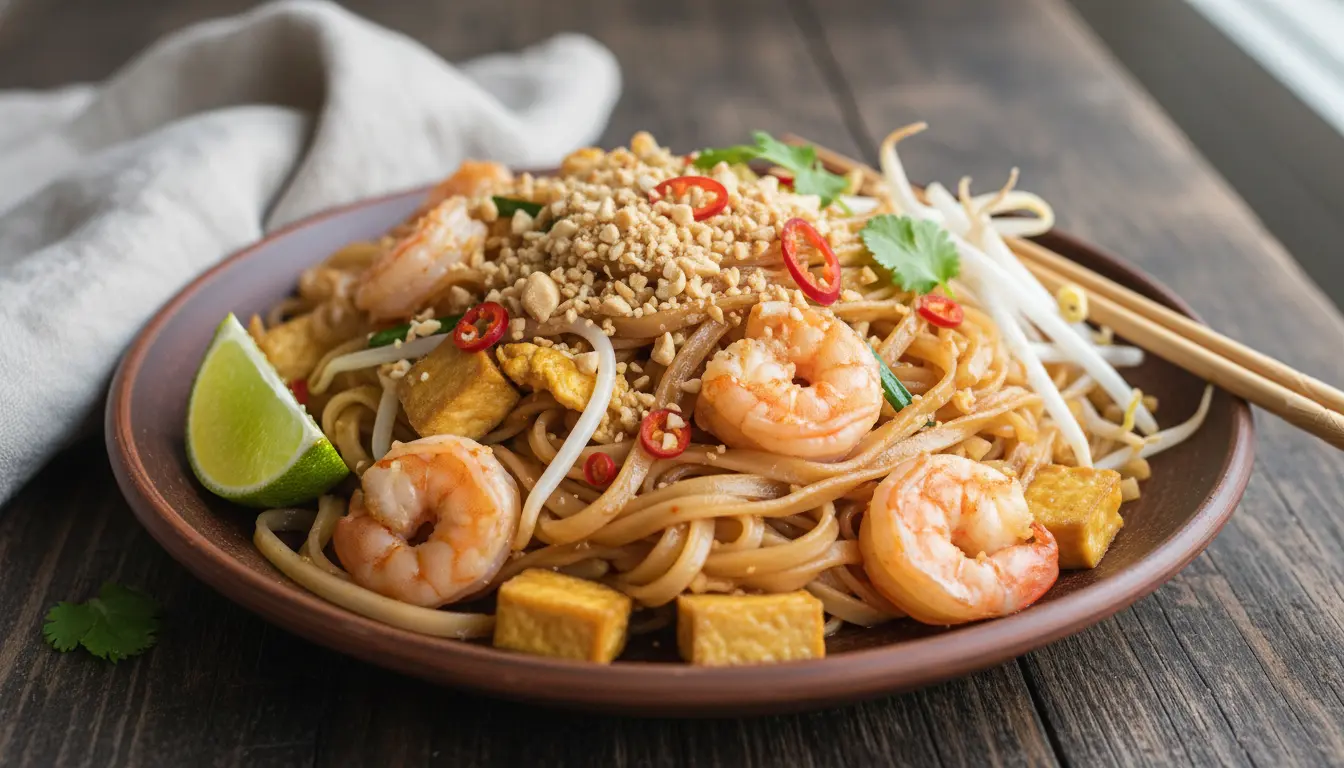
Authentic Pad Thai
Ingredients
Method
- Soak rice noodles in warm water until pliable, ~20 min; drain.
- Mix tamarind, fish sauce and palm sugar into a sauce.
- Stir-fry tofu and shrimp in a hot wok until just cooked; remove.
- Add noodles and sauce; toss over high heat until absorbed.
- Push aside, scramble the eggs, then fold everything together.
- Add bean sprouts, chives and peanuts; toss 30 seconds. Serve with lime.
Notes
Frequently asked questions
Can I make Pad Thai without tamarind?
You can approximate it with equal parts lime juice and a little brown sugar, but real tamarind paste gives the authentic fruity sourness and is worth buying.
Why are my noodles mushy?
They were over-soaked or the wok wasn’t hot enough. Soak in warm (not boiling) water just until pliable, and cook over the highest heat in small batches.
What’s the best protein?
Shrimp is classic, but chicken, or tofu alone for a vegetarian version, all work. Keep the sauce and method identical.
Variations & substitutions
- Protein Power-Ups: While shrimp and chicken are classic, feel free to swap or combine. Try thinly sliced pork loin, firm or extra-firm tofu (pressed and pan-fried until golden), or even a medley of mushrooms for a vegetarian option. For tofu, ensure it’s well-pressed to remove excess water, then pan-fry separately until crispy before adding back to the wok.
- Noodle Nuances: Our recipe calls for standard 3-5mm wide rice stick noodles (Sen Lek). If you prefer a chewier texture and can find them, wider Sen Jan noodles (around 8mm) are also used in some regions of Thailand. Avoid fresh rice noodles as they tend to break down and become mushy in a stir-fry.
- Veggie Variety: Beyond the essential bean sprouts and garlic chives, consider adding thinly sliced carrots, bell peppers, or even a handful of gai lan (Chinese broccoli) for extra crunch and nutrition. Add harder vegetables early in the stir-fry process to ensure they cook through.
- Spice Level: Adjust the dried chili flakes to your preference. For a milder Pad Thai, reduce or omit. For a fiery kick, add a pinch more or serve with a side of prik nam pla (fish sauce with chilies).
- Sweet & Sour Balance: The beauty of Pad Thai is its customizable balance. If you prefer it sweeter, add a touch more palm sugar. For more tang, a bit more tamarind paste will do the trick. Always taste the sauce before adding it to the noodles.
What to serve with it
Authentic Pad Thai is often a complete meal in itself, a symphony of flavors and textures. However, in Thailand, it’s common to enjoy it alongside other dishes as part of a larger spread or with simple accompaniments that enhance the experience. Here are some traditional and complementary pairings:- Fresh Lime Wedges: An absolute must! A squeeze of fresh lime brightens the dish and cuts through the richness.
- Extra Crushed Peanuts: For added texture and nutty flavor, always have a small bowl of extra crushed peanuts on the side.
- Cucumber Slices or Ajard: Thinly sliced cucumbers offer a refreshing contrast. A simple Ajard (Thai cucumber relish) made with cucumbers, shallots, and chilies in a sweet vinegar dressing is also excellent.
- Prik Nam Pla: A small bowl of fish sauce with sliced bird’s eye chilies. For those who like an extra salty, spicy kick.
- Clear Broth Soup: A light, clear soup, like a simple vegetable broth or a mild Tom Yum clear soup (without coconut milk), can be a refreshing palate cleanser.
- Thai Iced Tea or Coffee: The creamy sweetness of a traditional Thai Iced Tea (Cha Yen) or Iced Coffee (Oliang) provides a wonderful balance to the savory and tangy Pad Thai.
Make ahead, storage & reheating
Pad Thai is best enjoyed fresh from the wok, but with a few smart techniques, you can still enjoy its deliciousness later. The key is managing the noodles’ texture.- Make Ahead: The Pad Thai sauce can be made ahead and stored in an airtight container in the refrigerator for up to 2-3 weeks. This makes weeknight cooking much faster. You can also prep your proteins and vegetables (slice, chop) a day in advance.
- Storage: Store leftover Pad Thai in a shallow, airtight container in the refrigerator for up to 2-3 days. The noodles will soften slightly over time, but the flavors will meld beautifully. Freezing is generally not recommended for optimal noodle texture, as they can become mushy upon thawing and reheating.
- Reheating (Stovetop Recommended):
- Stovetop: This is the best method to revive your Pad Thai. Heat a wok or large non-stick skillet over medium-high heat. Add a tablespoon of neutral oil, and if the noodles seem dry, a splash (1-2 tablespoons) of water or chicken/vegetable broth. Add the Pad Thai and stir-fry gently for 3-5 minutes, breaking up any clumps, until heated through. Be careful not to overcook.
- Microwave: While convenient, the microwave can make noodles softer. Place a single serving in a microwave-safe dish. Add a tiny splash of water (about 1 teaspoon) and cover loosely. Heat on high for 1-2 minutes, stirring halfway through, until warmed through.
Common mistakes to avoid
- Overcooking the Noodles: This is the cardinal sin of Pad Thai. Rice noodles should be soaked, not boiled, until pliable but still firm and slightly undercooked (al dente). They will finish cooking in the wok. Overcooked noodles will turn mushy and clumpy.
- Crowding the Wok: A common stir-fry mistake. If you overload your wok, the temperature drops, and ingredients steam instead of stir-fry, leading to soggy results. Cook in batches if necessary, especially if you have a smaller wok or skillet.
- Insufficient Wok Heat: Pad Thai demands high heat for that signature smoky ‘wok hei’ flavor and proper caramelization. Ensure your wok is screaming hot before adding oil and ingredients. If the heat is too low, everything will stew.
- Improper Sauce Balance: The Pad Thai sauce is a delicate balance of sweet, sour, salty, and umami. Taste your sauce before adding it to the wok and adjust. Too much sugar makes it cloying, too much tamarind makes it overly sour.
- Adding Ingredients in the Wrong Order: Timing is crucial. Proteins should be cooked first (and often removed) to prevent overcooking. Harder vegetables go in before softer ones. The noodles and sauce are added last, followed by the egg and garnishes.
- Not Prepping Everything First: Stir-frying is fast-paced. Have all your ingredients measured, chopped, and within arm’s reach (mise en place) before you even turn on the stove. This prevents frantic scrambling and burnt ingredients.
