
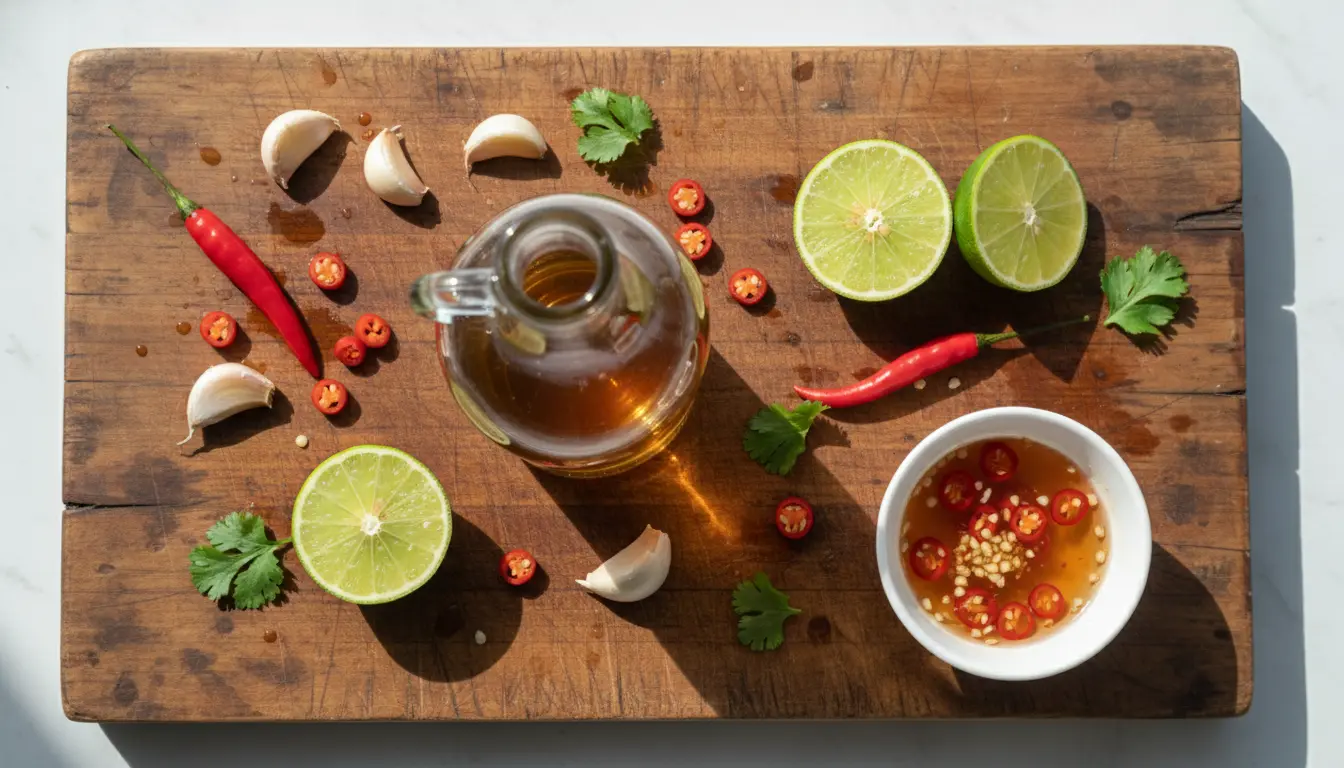
Fish sauce is one of the culinary world’s most potent secret weapons. A staple in Southeast Asian kitchens, this fermented fish condiment is a powerhouse of umami, capable of transforming bland dishes into flavor explosions. If you’ve ever wondered how to unlock its full potential, choose the best bottle, or even what to do when you’re out, you’ve come to the right place. Welcome to your comprehensive guide to all things fish sauce!
The main types
While the core concept of fermented fish and salt remains constant, regional variations in fish type, fermentation methods, and aging result in distinct flavor profiles. Understanding these nuances can help you choose the perfect bottle for your culinary adventures.
- Thai Fish Sauce (Nam Pla): Often made from anchovies, Nam Pla is typically clear, reddish-brown, and boasts a balanced profile of salty, sweet, and deeply savory umami. Fermentation usually lasts 12-18 months. Brands like Tiparos, Squid Brand, and Megachef are popular choices. It’s excellent for stir-fries, curries, and dipping sauces.
- Vietnamese Fish Sauce (Nước Mắm): Primarily made from anchovies, Vietnamese fish sauce is renowned for its clarity and complexity. Premium versions, known as “Nước Mắm Nhĩ” (first press), are highly prized for their intense, pure flavor and often have a higher nitrogen content. Brands like Red Boat (which is also produced in Vietnam) and Three Crabs are widely available. It’s indispensable for dipping sauces (Nước Chấm), marinades, and seasoning soups like Pho.
- Filipino Fish Sauce (Patis): While also made from anchovies, Patis can sometimes incorporate other small fish like galunggong. It tends to be saltier and can have a more pronounced, robust “fishy” aroma compared to its Thai or Vietnamese counterparts. It’s often used as a table condiment, in stews like Sinigang, or as a base for dipping sauces. Rufina and Lorins are common brands.
- Korean Fish Sauce (Aekjeot): Commonly made from anchovies or sand lance, Korean fish sauce is a critical ingredient in making kimchi, providing essential umami and aiding in fermentation. It’s very pungent and salty, with a distinct flavor profile that stands up to strong spices. Brands include CJ Beksul and Sempio.
- Japanese Fish Sauce (Shottsuru/Ishiru): Less globally recognized but historically significant, Japanese fish sauces are often made from sandfish (hatahata) or squid. They tend to be milder and more delicate in umami, used in specific regional dishes and broths, particularly in the Akita and Ishikawa prefectures.
How to choose a good one
Selecting a quality fish sauce can significantly impact your cooking. Here’s what to look for:
- Ingredients List: The best fish sauces have the shortest ingredient lists: fish (usually anchovies), salt, and water. Avoid brands that list sugar, MSG, artificial colors, or preservatives. A good fish sauce doesn’t need additives to taste great.
- Color and Clarity: A high-quality fish sauce should be clear and range from a rich amber to a reddish-brown, similar to strong black tea. Avoid murky, cloudy, or overly dark/black fish sauces, which can indicate impurities or poor processing. Pale, yellowish versions might be watered down or less flavorful.
- Aroma: This is where it gets tricky. Good fish sauce will smell pungent, savory, and briny, with a complex, almost cheesy or mushroomy depth. It should NOT smell rotten, overly sulfuric, or harshly chemical. The “fishy” smell should be pleasant and integrated, not offensive.
- Taste: Expect a strong salty punch upfront, but it should quickly give way to a profound umami flavor, often with a subtle sweetness and no bitter or metallic aftertaste. A balanced fish sauce offers complexity beyond just salt.
- Nitrogen Content (Protein): Many premium fish sauces indicate their nitrogen content in degrees (e.g., 30°N, 40°N). This refers to the amount of amino acid nitrogen, which directly correlates with umami intensity. Higher numbers (30°N and above) generally signify a more potent, higher-quality product. Red Boat 40°N is a prime example of a top-tier choice.
- “First Press” (Nước Mắm Nhĩ): If you see this term, especially on Vietnamese brands, it indicates the first liquid drawn off during fermentation. This is akin to extra virgin olive oil—it’s the purest, most concentrated, and most flavorful extract.
How to store it
Fish sauce is remarkably stable, thanks to its high salt content. Proper storage ensures its flavor and quality are maintained for a long time.
- Unopened: Store unopened bottles in a cool, dark pantry away from direct sunlight or heat. It can last for several years, often well past the printed best-by date, without significant degradation.
- Opened:
- Pantry vs. Refrigerator: Once opened, fish sauce can be stored in the pantry or refrigerator. For most home cooks, storing it in a cool, dark pantry is perfectly fine for 1-2 years. The high salt content acts as a natural preservative.
- Refrigeration: While not strictly necessary, refrigerating opened fish sauce, especially in warmer climates, can help preserve its peak flavor and aroma for an even longer period (up to 3 years or more) and prevent any subtle flavor changes.
- Tight Seal: Always ensure the cap is tightly sealed after each use. This prevents oxidation, which can subtly alter the flavor over time, and also contains its pungent aroma from permeating your pantry or fridge.
- Crystallization: Don’t be alarmed if you see salt crystals forming at the bottom or around the neck of the bottle, especially if stored in a cooler environment. This is a natural occurrence due to the high salt concentration and does not affect quality. Simply shake the bottle or warm it gently to dissolve them.
How to use it in cooking
Fish sauce is incredibly versatile, adding depth and complexity to a wide array of dishes. Here’s how to integrate it into your cooking like a pro:
- As an Umami Booster:
- Soups and Stews: Add 1-2 teaspoons per quart of liquid to broths, curries, and stews (like Pho, Tom Yum, or even a hearty beef stew) during the last 15-30 minutes of simmering. It deepens the savory notes without adding a noticeable “fishy” flavor.
- Marinades: Essential for grilled meats. Combine 1-2 tablespoons of fish sauce with soy sauce, sugar, garlic, ginger, and lime juice for pork, chicken, or beef. Marinate for at least 30 minutes, or ideally 4-8 hours in the refrigerator for maximum flavor penetration.
- Stir-fries: Incorporate 1-2 teaspoons into your stir-fry sauce base. For dishes like Pad Thai or Pad See Ew, it’s a non-negotiable component. Add it towards the end of cooking to preserve its fresh, pungent notes.
- Dressings and Dipping Sauces: Fish sauce is the backbone of many Southeast Asian dipping sauces. See the Nuoc Cham example below.
- Specific Applications & Recipes:
- Nuoc Cham (Vietnamese Dipping Sauce): A classic. Whisk together 2 tablespoons fish sauce, 2 tablespoons granulated sugar, 4 tablespoons warm water, and 2 tablespoons fresh lime juice. Stir until sugar dissolves. Add 1-2 minced garlic cloves and 1-2 finely sliced bird’s eye chilies to taste. Use for spring rolls, grilled meats, or rice vermicelli bowls.
- Pad Thai Sauce: A typical ratio includes 3 tablespoons fish sauce, 3 tablespoons tamarind paste, 3 tablespoons palm sugar, and 1/4 cup water. Simmer until slightly thickened, then use to coat noodles and other ingredients.
- Kimchi: Korean fish sauce (Aekjeot) is crucial for authentic kimchi. A common ratio is 1/4 cup fish sauce per 5 lbs of Napa cabbage, incorporated into the spice paste.
- Roast Chicken/Pork: For an incredible crust and flavor, rub a mixture of 2 tablespoons fish sauce, 4 minced garlic cloves, 1 teaspoon black pepper, and 1 teaspoon sugar onto a whole chicken or pork shoulder before roasting at 375°F (190°C).
- Caesar Dressing: A secret ingredient for umami depth. Substitute 1/2 – 1 teaspoon of fish sauce for anchovy paste in your favorite Caesar dressing recipe.
- Bloody Mary: A tiny dash (1/4 teaspoon) can add a layer of complexity and savory depth to this classic cocktail.
- Expert Tips:
- Start Small, Taste Often: Fish sauce is potent. Begin with a smaller amount (e.g., 1/2 teaspoon) and add more gradually, tasting as you go, until you reach your desired flavor.
- Balance is Key: Its saltiness and funk are best balanced with other flavors. Always pair it with acidity (lime juice, vinegar), sweetness (sugar, palm sugar), and other aromatics (garlic, ginger, chilies) for a harmonious profile.
- Cooking vs. Finishing: Adding fish sauce early in cooking allows its flavors to meld and mellow. Adding a touch at the very end, or as a raw component in a dipping sauce, provides a fresher, more pronounced punch.
- The “Secret Ingredient”: Don’t limit it to Asian cuisine. A tiny splash (1/4 – 1/2 teaspoon) can add an invisible umami boost to non-Asian dishes like tomato sauce, chili, gravy, or even scrambled eggs. It enhances savory notes without making the dish taste “fishy.”
Substitutes
While fish sauce offers a unique flavor profile that’s hard to replicate exactly, there are several substitutes you can use in a pinch, depending on whether you need saltiness, umami, or a touch of pungency.
- Soy Sauce: This is the most common substitute. It provides saltiness and umami, but lacks the distinct fermented funk and depth of fish sauce. Use a 1:1 ratio, but you might need to add a bit more or incorporate other umami boosters.
- Tamari or Coconut Aminos: For gluten-free alternatives to soy sauce, these offer similar salty and umami notes. Use them in a 1:1 ratio as you would soy sauce.
- Worcestershire Sauce: Believe it or not, Worcestershire sauce contains anchovies! It offers a savory, tangy, and slightly sweet profile. Use about half the amount of fish sauce called for, then taste and adjust, as it has a more complex, vinegary flavor.
- Mushroom-based Umami (Vegetarian/Vegan):
- Mushroom Powder: Grind dried shiitake mushrooms into a powder. Add 1/2 – 1 teaspoon along with extra salt.
- Dried Shiitake Broth: Rehydrate dried shiitake mushrooms in warm water. Use the concentrated broth (1:1 ratio with fish sauce) and add extra salt.
- Vegan “Fish Sauce”: Specialty stores or online retailers offer plant-based fish sauces, often made from seaweed, mushrooms, or fermented pineapple. These are designed to mimic the flavor profile more closely.
- Brine from Capers or Olives: For a salty, briny kick, especially in dressings or marinades, a small amount of caper or olive brine can work, though the flavor profile will be distinctly different. Use sparingly, perhaps 1/2 the amount of fish sauce.
- Salt: As a last resort, if you only need the saltiness and nothing else, use plain salt. However, you will miss out on all the umami and complexity fish sauce brings.
Frequently asked questions
Is fish sauce vegetarian or vegan?
No, traditional fish sauce is made from fermented fish (typically anchovies) and is therefore neither vegetarian nor vegan. For plant-based diets, look for specialized vegan “fish sauce” alternatives made from ingredients like seaweed, mushrooms, or fermented pineapple, or use substitutes like soy sauce or tamari with an added umami booster like mushroom powder.
Why does my fish sauce smell so strong?
The strong, pungent aroma is entirely normal and a hallmark of traditional fish sauce. It comes from the fermentation process, which breaks down fish proteins into amino acids, creating those complex, savory, and sometimes challenging smells. A good quality fish sauce should smell savory and complex, not rotten or overly “fishy” in a bad way. The aroma often mellows significantly or even disappears during cooking, transforming into deep umami.
Can I use fish sauce raw, like in a dipping sauce?
Absolutely! Many of fish sauce’s most iconic uses are raw. Think of Vietnamese Nước Chấm, a dipping sauce for spring rolls, or a simple mixture for grilled meats. When used raw, its intense flavor is typically balanced with other ingredients like sugar, lime juice, vinegar, garlic, and chilies to create a harmonious and refreshing condiment.
What’s the difference between light and dark fish sauce?
Unlike soy sauce, fish sauce isn’t typically categorized as “light” or “dark” in the same way. Variations in color (from light amber to reddish-brown) usually indicate differences in fermentation time, the type of fish used, or the quality of the “press.” “First press” (Nước Mắm Nhĩ) is often lighter in color but boasts the most concentrated and purest flavor. Very dark or black fish sauce might indicate a lower quality product, while overly pale versions could be watered down. Always prioritize clarity and the nitrogen content over just color.
