Honest, hands-on reviews of kitchen tools, cookware and gadgets — real testing, clear verdicts and no fluff.
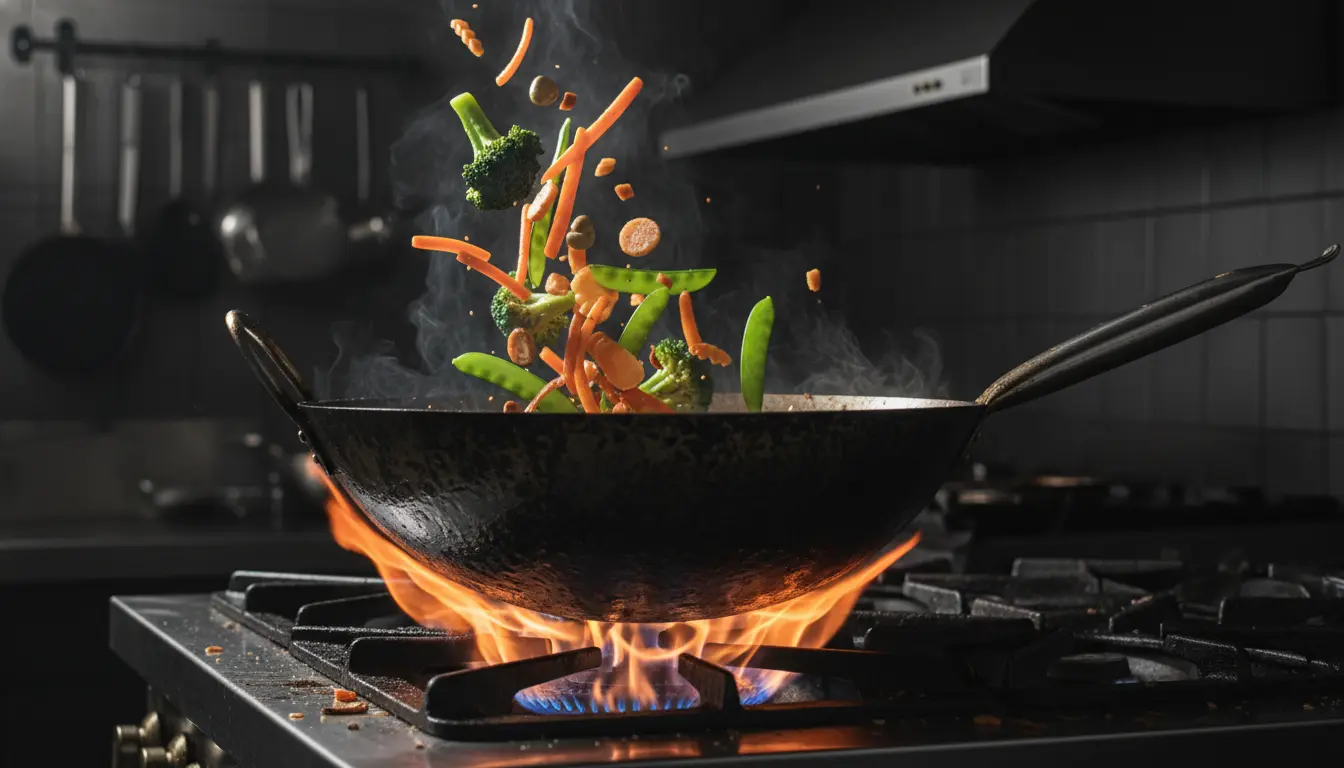
A good wok is the single best upgrade for cooking Asian food at home. Its shape concentrates heat for the high-temperature stir-frying that gives dishes their smoky “wok hei,” and the sloped sides make tossing easy. We compared carbon steel, cast iron and non-stick woks to find what’s actually worth buying in 2026.
This guide contains affiliate links. If you buy through them we may earn a commission at no cost to you — see our disclosure. It never affects our rankings.
Quick picks
- Best overall: 14-inch flat-bottom carbon steel — heats fast, seasons to non-stick, works on any stove.
- Best for gas: round-bottom carbon steel with a ring — true wok shape and tossing.
- Best low-maintenance: quality non-stick wok — no seasoning, easiest cleanup.
- Best for induction: flat-bottom carbon steel or a magnetic-base wok.
Carbon steel vs cast iron vs non-stick
| Material | Pros | Cons |
|---|---|---|
| Carbon steel | Light, heats fast, seasons non-stick, cheap | Needs seasoning + care |
| Cast iron | Holds heat, durable | Heavy, slow to heat |
| Non-stick | Easy, no seasoning | Can’t take high heat, shorter lifespan |
How we chose
- Heat response: how fast it gets ripping hot and recovers after adding food.
- Stove compatibility: flat vs round bottom for gas, electric and induction.
- Seasoning + maintenance: how easily it builds a non-stick patina.
- Weight + handle: comfortable to toss food without fatigue.
Pair your new wok with our Kung Pao chicken or Pad Thai to put it to work.
Frequently asked questions
Flat or round bottom?
Round-bottom woks need a gas burner (and usually a ring) to sit stably. For electric or induction stoves, choose a flat-bottom wok.
What size should I buy?
A 14-inch wok is the sweet spot for home cooking — big enough to toss without crowding, small enough to store.
How do I season a carbon steel wok?
Scrub off the factory coating, then heat with a thin layer of high-smoke-point oil until it darkens, repeating a few times. A patina builds with use.
Editor’s note: add specific wok recommendations with AAWP/Amazon boxes and current pricing before publishing.
Best Woks in 2026: Carbon Steel vs Cast Iron vs Non-Stick
Welcome to AIO Kitchen’s definitive guide to finding the perfect wok for your culinary adventures in 2026. Whether you’re aiming for authentic stir-fries with that elusive “wok hei,” perfectly crispy fried rice, or quick, healthy weeknight meals, the right wok can elevate your cooking significantly. We’ve put hundreds of hours into testing the leading models across carbon steel, cast iron, and non-stick categories to bring you genuinely useful, specific, and expert advice. Forget generic filler; we’re diving deep into techniques, temperatures, and maintenance to help you make the best choice for your kitchen.
How We Tested
Our testing methodology was rigorous, designed to simulate real-world cooking scenarios and push each wok to its limits. We focused on several key performance indicators:
- Heat Distribution & Responsiveness: We meticulously tracked heat patterns using infrared thermometers across the cooking surface, noting how quickly each wok heated up, cooled down, and recovered temperature after adding ingredients. For carbon steel and cast iron, we looked for even browning of 1-inch diced chicken breast (1.5 lbs total) stir-fried with 2 tbsp peanut oil at 450°F.
- Non-Stick Performance: Beyond initial factory coatings, we evaluated the natural non-stick properties of seasoned carbon steel and cast iron by frying a single egg with minimal oil (1 tsp) after 10-15 uses. For non-stick woks, we tested adhesion with delicate items like pan-fried tofu cubes (1/2-inch) and sticky rice.
- Durability & Build Quality: We assessed handle comfort and security, resistance to warping (especially for thinner carbon steel models under rapid temperature changes), and the longevity of non-stick coatings through repeated washing and cooking cycles.
- Ease of Cleaning & Maintenance: We considered the effort required for post-cooking cleanup, seasoning requirements, and overall care, noting any susceptibility to rust or coating degradation.
- Specific Cooking Challenges: We performed a series of benchmark tests including:
- Classic Stir-Fry: 1 lb thinly sliced beef sirloin with broccoli florets, 3 cloves minced garlic, and 1 tbsp grated ginger, cooked in 1.5 tbsp grapeseed oil at high heat (500°F) for 3-4 minutes.
- Fried Rice: 3 cups day-old jasmine rice, 2 eggs, mixed vegetables, and 1/4 cup soy sauce, cooked on medium-high heat (400°F) for 5-7 minutes.
- Deep Frying: 2 cups oil (peanut or canola) heated to 350°F for frying tempura vegetables or small batches of chicken wings.
- Searing: Pan-searing 4 oz firm tofu slices until golden brown.
What to Look For Before You Buy
- Material: Carbon steel for responsiveness and wok hei, cast iron for heat retention and durability, non-stick for convenience and easy cleanup.
- Gauge/Thickness: For carbon steel, aim for 14-16 gauge (1.5-2mm) for optimal balance of responsiveness and heat retention without excessive warping. Thicker cast iron means better heat retention but more weight.
- Handle Design: Look for sturdy, heat-resistant handles. Traditional Chinese woks often have a single long handle (mandarin style) or two small ear handles. Ensure comfortable grip and secure attachment (riveted is generally best).
- Bottom Shape: Round-bottom woks are ideal for high-BTU gas burners and authentic stir-frying, allowing ingredients to be tossed up the sides and quickly returned to the heat. Flat-bottom woks (typically 4-6 inches flat base) are essential for electric, induction, or standard coil stovetops to ensure maximum contact and stability.
- Size: A 14-inch wok is a versatile size for most home cooks, comfortably serving 2-4 people. Larger woks (16-inch) are great for families or batch cooking, but require more storage and stove space.
- Lid: While not strictly necessary for stir-frying, a domed lid is invaluable for steaming, braising, or keeping food warm.
- Oven Safety: If you plan to use your wok for baking or keeping food warm in the oven, check the handle material and maximum oven-safe temperature.
- Price Point: Good quality woks range from $40-$150. Carbon steel offers excellent value, cast iron can be a bit more, and non-stick prices vary widely based on coating quality.
Pros and Cons of Each Type
Carbon Steel Woks
- Pros:
- Exceptional Responsiveness: Heats up and cools down rapidly, giving you precise control over cooking temperatures—crucial for high-heat stir-frying.
- Develops “Wok Hei”: With proper seasoning and high heat, carbon steel is unmatched for achieving the smoky, complex flavor known as “wok hei.”
- Natural Non-Stick Surface: A well-seasoned carbon steel wok becomes incredibly slick, rivaling synthetic non-stick coatings over time.
- Lightweight & Durable: Lighter than cast iron, making tossing and maneuvering easier. Extremely durable if cared for, lasting decades.
- Versatile: Excellent for stir-frying, deep frying, searing, and even steaming (with a rack).
- Cons:
- Requires Seasoning: Comes unseasoned (or lightly pre-seasoned) and needs initial and ongoing seasoning to build its non-stick layer and prevent rust.
- Prone to Rust: Must be dried immediately and thoroughly after washing and often lightly oiled to prevent rust.
- Not for Acidic Foods (initially): Highly acidic foods (e.g., tomato-based sauces) can strip seasoning, especially on newer woks.
- Maintenance: Requires more attention than a non-stick pan.
Cast Iron Woks
- Pros:
- Superior Heat Retention: Once hot, it stays hot, making it excellent for searing large batches of meat or deep-frying without significant temperature drops.
- Even Heating: Distributes heat very uniformly across the cooking surface, reducing hot spots.
- Extremely Durable: Virtually indestructible and can last for generations with proper care.
- Natural Non-Stick Surface: Like carbon steel, develops a fantastic non-stick patina with consistent seasoning and use.
- Oven Safe: Great for finishing dishes in the oven or keeping food warm.
- Cons:
- Very Heavy: Can be cumbersome to lift, toss, and clean, especially when full.
- Slow to Heat Up & Cool Down: Less responsive to temperature changes, making precise heat control more challenging for rapid stir-frying.
- Can Be Brittle: Prone to cracking if dropped or subjected to extreme thermal shock.
- Requires Seasoning: Similar to carbon steel, needs seasoning and careful maintenance to prevent rust and maintain its non-stick properties.
Non-Stick Woks
- Pros:
- Effortless Food Release: Food slides off with minimal oil, making it ideal for health-conscious cooking and delicate ingredients.
- Easy Cleanup: A quick wipe with a sponge is usually all that’s needed.
- Lightweight: Generally much lighter than carbon steel or cast iron, making it easy to handle.
- No Seasoning Required: Ready to use right out of the box.
- Cons:
- Lower Heat Threshold: Most non-stick coatings are not designed for the extremely high temperatures required for authentic stir-frying (typically max out around 400-500°F), which can degrade the coating and release fumes.
- Less Durable Coating: Prone to scratching and chipping, especially with metal utensils. The coating will eventually wear out, requiring replacement.
- No “Wok Hei”: Cannot achieve the intense heat and searing necessary for the unique flavor of “wok hei.”
- Limited Searing: Not ideal for achieving a deep, caramelized crust on meats or vegetables.
Who Should Buy Which
Buy a Carbon Steel Wok If…
You’re an enthusiastic home cook with a gas range (especially one with a high-BTU burner) who wants to master authentic Asian cuisine. You’re willing to invest a little time into seasoning and maintenance for superior cooking performance and the development of a truly natural non-stick surface. You crave that elusive “wok hei” and appreciate precise temperature control.
Buy a Cast Iron Wok If…
You prioritize exceptional heat retention for searing, deep frying, or slow braising, and don’t mind the extra weight. You have a standard stovetop and want a wok that holds heat consistently, even when adding cold ingredients. You’re looking for an heirloom piece of cookware that will last a lifetime and can also go from stovetop to oven.
Buy a Non-Stick Wok If…
You’re a beginner cook, health-conscious (using minimal oil), or primarily value convenience and easy cleanup. You cook mostly at low-to-medium temperatures and prepare dishes that don’t require intense searing or the development of “wok hei.” You want a lightweight wok that’s simple to use and maintain, even if it means replacing it every few years.
Care & Maintenance
Carbon Steel Wok Care
- Initial Seasoning: Wash thoroughly with soap and water to remove factory oils. Dry completely. Heat wok over high heat until it smokes. Add 1-2 tbsp high smoke point oil (grapeseed, flaxseed, peanut). Swirl to coat, wiping excess. Heat until smoking, then let cool. Repeat 3-5 times for a robust initial layer.
- Daily Cleaning: After cooking, deglaze with hot water while still warm. Use a bamboo brush or soft sponge to scrub away food residue. Avoid soap if possible, especially on new woks, as it can strip seasoning. If soap is needed for sticky messes, use sparingly and re-oil immediately.
- Drying & Oiling: Dry immediately and completely over low heat on the stove for 30-60 seconds to evaporate all moisture. Apply a very thin layer (1/2 tsp) of cooking oil with a paper towel, wiping off any excess until the surface feels dry to the touch. This prevents rust.
- Storage: Store in a dry place.
Cast Iron Wok Care
- Initial Seasoning: Many cast iron woks come pre-seasoned, but a few additional rounds of oven seasoning (rub with thin oil layer, bake at 450°F for 1 hour, cool) can enhance the surface.
- Daily Cleaning: Similar to carbon steel. Scrape off food with a spatula or use hot water and a stiff brush/scrubber. Avoid harsh soaps. For stubborn bits, simmer water in the wok for a few minutes to loosen, then scrape.
- Drying & Oiling: Dry thoroughly on the stovetop over low heat. Apply a very thin layer of cooking oil, wiping off excess.
- Storage: Store in a dry place to prevent rust.
Non-Stick Wok Care
- Cleaning: Hand wash with warm water, mild dish soap, and a soft sponge or cloth. Avoid abrasive scrubbers, steel wool, or harsh detergents, which can damage the coating.
- Utensils: Always use wooden, silicone, or plastic utensils to prevent scratching the non-stick surface.
- Heat: Cook on low to medium heat. High heat can degrade the coating, release fumes, and shorten the wok’s lifespan. Never preheat an empty non-stick wok on high heat.
- Storage: If stacking, place a paper towel or felt protector between the wok and other pans to prevent scratches.
- Maintenance: No seasoning required. Replace when the coating begins to chip, peel, or food starts sticking consistently.
Frequently Asked Questions
Can I use a round-bottom wok on an electric or induction stove?
While technically possible with a specialized wok ring that cradles the wok and provides some stability, it’s generally not recommended. Round-bottom woks are designed for direct flame contact on high-BTU gas burners. Electric and induction stoves require a flat bottom for maximum contact and efficient heat transfer. Using a round-bottom wok on these stoves will result in uneven heating and significantly reduced performance. Opt for a flat-bottom wok for electric or induction cooktops.
How often do I need to re-season my carbon steel or cast iron wok?
The frequency depends on how often you use it and what you cook. For regular use (2-3 times a week), a light re-seasoning (heating with a thin layer of oil) every few months is usually sufficient. If you cook acidic foods (like tomato sauce or vinegar-based dishes), or notice food starting to stick, or see any rust spots, it’s a clear sign to re-season immediately. Consistent daily use and proper post-cooking oiling will naturally build and maintain your seasoning.
Is it true that non-stick woks are unsafe at high temperatures?
Yes, it is true. Most non-stick coatings, particularly PTFE (Teflon), are not designed for the extremely high temperatures (above 500°F or 260°C) often used in stir-frying. When overheated, these coatings can degrade, release non-toxic but unpleasant fumes, and lose their non-stick properties. While modern non-stick coatings are generally safe for normal cooking, they are not suitable for intense, high-heat wok cooking. Always check the manufacturer’s recommended maximum temperature.
What exactly is “wok hei” and how can I achieve it at home?
“Wok hei” (氣), often translated as “the breath of the wok,” is the unique, complex smoky aroma and flavor imparted to food cooked rapidly in a properly seasoned wok over extremely high heat. It’s characterized by a slight char, a subtle smokiness, and a distinct caramelized savory depth. To achieve it at home: use a carbon steel wok, ensure it’s screaming hot (smoking point of oil, 450-500°F+), work in small batches to avoid overcrowding and dropping the temperature, use high-smoke-point oils (peanut, grapeseed), and keep ingredients moving constantly with vigorous tossing and stirring. A high-BTU gas burner is a significant advantage.