
Watch how to make it
Bulgogi — “fire meat” — is Korea’s beloved marinated beef: thin slices in a sweet-savory marinade of soy, pear, garlic and sesame, seared hot and fast. It’s caramelised, juicy and endlessly versatile over rice, in lettuce wraps, or in bibimbap.
Why this recipe works
- Grated pear in the marinade tenderises the beef and adds natural sweetness.
- Slice the beef thin (freeze 30 min first) so it cooks in seconds and soaks up marinade.
- Sear in batches over high heat for caramelisation, not steaming.
Key ingredients
Thin-sliced ribeye or sirloin, soy sauce, Asian pear, garlic, sesame oil, sugar, scallions and sesame seeds. Full quantities in the recipe card.
Tips from our kitchen
- Marinate at least 30 minutes (or overnight) for deeper flavour.
- Get the pan or grill ripping hot so the marinade caramelises rather than boils.
- Serve with rice, ssamjang and lettuce for wraps.
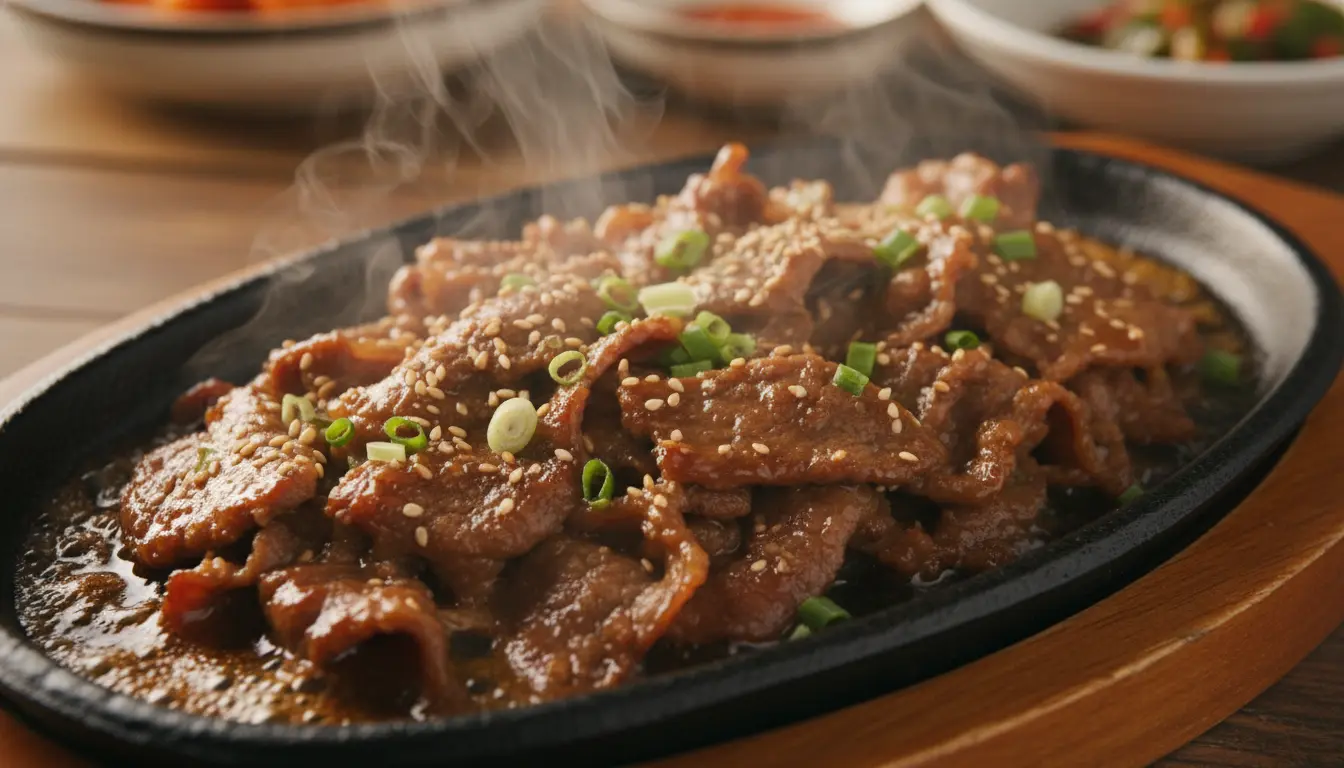
Korean Beef Bulgogi
Ingredients
Method
- Mix soy, grated pear, garlic, sesame oil and sugar into a marinade.
- Marinate the sliced beef at least 30 minutes (or overnight).
- Sear in batches in a ripping-hot pan or grill until caramelised.
- Garnish with scallions and sesame seeds; serve with rice.
Notes
Frequently asked questions
What’s the best cut?
Well-marbled ribeye is classic and juicy; sirloin is a leaner option. Slice thinly against the grain.
No Asian pear?
Substitute a ripe regular pear or kiwi for the tenderising enzymes — don’t marinate too long with kiwi or the meat turns mushy.
Variations & substitutions
- Meat Swaps: While thinly sliced ribeye is classic, you can achieve delicious results with other cuts. Try sirloin, flank steak (sliced thinly against the grain), or even thinly sliced pork shoulder (for a twist on Daeji Bulgogi). For poultry, use boneless, skinless chicken thighs or thinly sliced chicken breast.
- Vegetarian/Vegan Option: Replace beef with firm or extra-firm tofu (pressed and sliced) or hearty mushrooms like king oyster or portobello. Adjust marinating time as plant-based proteins don’t require tenderizing. Ensure your soy sauce is gluten-free (tamari) if needed.
- Sweetener Alternatives: Asian pear is traditional, but a small amount of grated apple, kiwi (use sparingly, 1/2 kiwi for 1 lb beef, marinate no longer than 30 minutes), or pineapple juice can substitute. For the sugar, brown sugar, honey, or even a touch of maple syrup can be used.
- Spice Level: For a spicy kick, add 1-2 tablespoons of Gochujang (Korean chili paste) to the marinade. This creates a spicier, slightly richer flavor profile.
- Added Vegetables: Feel free to incorporate thinly sliced yellow onions, carrots, bell peppers, or mushrooms (shiitake or cremini) directly into the marinade for the last 30 minutes, or stir-fry them alongside the beef, adding them a few minutes before the beef is fully cooked.
What to serve with it
Bulgogi is the centerpiece of a traditional Korean meal, designed to be enjoyed with a variety of complementary dishes that offer balance in flavor and texture. Think fresh, fermented, and comforting elements that cut through the richness of the beef and cleanse the palate. The best way to enjoy it is family-style, allowing everyone to mix and match.
- Steamed Short-Grain White Rice: The absolute essential. Its mild flavor and sticky texture are perfect for soaking up the savory bulgogi sauce.
- Kimchi: Fermented napa cabbage kimchi is a must-have, offering a spicy, tangy, and umami counterpoint. Radish kimchi (kkakdugi) or cucumber kimchi (oi sobagi) are also excellent.
- Ssam (Lettuce Wraps): Fresh red leaf lettuce, perilla leaves (kkaennip), or even steamed cabbage leaves provide a refreshing wrapper. Fill with a piece of bulgogi, a dab of ssamjang (spicy dipping sauce), and a bit of rice.
- Banchan (Side Dishes): A selection of small Korean side dishes elevates the meal. Popular choices include seasoned spinach (sigeumchi namul), bean sprout salad (kongnamul muchim), pickled radish, or spicy cucumber salad (oi muchim).
- Pajeori (Scallion Salad): Thinly sliced scallions tossed in a light, tangy dressing of soy sauce, vinegar, and gochugaru (Korean chili flakes) offer a sharp, fresh contrast.
- Doenjang Jjigae or Kimchi Jjigae: A warm, savory stew like fermented soybean paste stew or kimchi stew provides a comforting and deeply flavorful accompaniment, especially on cooler days.
Make ahead, storage & reheating
Bulgogi is a fantastic dish for meal prep, especially the marinating stage, which actually improves its flavor and tenderness over time. Proper storage ensures you can enjoy delicious bulgogi with minimal fuss.
- Make Ahead (Marination): The beef can be marinated in an airtight container or a heavy-duty zip-top bag in the refrigerator for up to 2-3 days. This allows the flavors to deepen considerably. If using kiwi or pineapple as a tenderizer, limit marination to 30 minutes to prevent the meat from becoming mushy. Asian pear is gentler and allows for longer marination.
- Storage (Raw, Marinated): Store raw, marinated beef in a sealed container in the coldest part of your refrigerator for up to 3 days.
- Storage (Cooked): Once cooked, allow the bulgogi to cool completely before transferring it to an airtight container. It can be stored in the refrigerator for 3-4 days.
- Freezing (Raw, Marinated): For longer storage, raw marinated bulgogi freezes beautifully. Place the marinated beef (without excess liquid) in a single layer in a freezer-safe zip-top bag, pressing out all air. Freeze flat for up to 3 months. Thaw overnight in the refrigerator before cooking.
- Freezing (Cooked): While possible, freezing cooked bulgogi can slightly alter the texture of the beef, making it a bit tougher upon reheating. If freezing, cool completely, then store in an airtight, freezer-safe container for up to 1-2 months.
- Reheating (Cooked): The best way to reheat cooked bulgogi is in a hot skillet over medium-high heat. Add a tiny splash of water or beef broth to prevent drying, and stir-fry quickly for 2-3 minutes until heated through. Avoid overcooking, as this will toughen the meat. If reheating from frozen, thaw in the refrigerator first, then reheat as above.
Common mistakes to avoid
- Not Slicing the Beef Thinly Enough: Bulgogi relies on very thin slices (about 1/8 to 1/4 inch thick) to ensure quick cooking and maximum tenderness. Thicker slices will cook unevenly and can become tough. Partially freezing the beef for 30-45 minutes makes it much easier to slice thinly.
- Over-Marinating with Strong Tenderizers: If your marinade includes kiwi, pineapple, or other strong enzymatic tenderizers, do NOT marinate for more than 30 minutes. These enzymes will break down the meat fibers too aggressively, resulting in a mushy, undesirable texture. Asian pear is a milder tenderizer and allows for longer marination.
- Overcrowding the Pan: This is a cardinal sin for bulgogi! When you add too much meat to the pan at once, it drastically lowers the pan’s temperature. Instead of searing and caramelizing, the beef will steam in its own juices, resulting in grey, watery, and tough meat. Cook in small batches, ensuring there’s plenty of space between pieces.
- Cooking on Too Low Heat: Bulgogi needs high heat to achieve that beautiful caramelization and slight char. A lukewarm pan will steam the meat, preventing the Maillard reaction and leaving you with less flavorful, tougher beef. Always preheat your pan or grill to medium-high or high heat.
- Adding Too Many Vegetables Too Early: While vegetables are a great addition, adding them all at the beginning will release too much moisture, again dropping the pan temperature and steaming the beef. If incorporating vegetables like onions or bell peppers, add them towards the end of the cooking process (the last 2-3 minutes) so they retain some crispness and don’t water down the dish.
More questions
Can I make this bulgogi spicy?
Absolutely! To add a delightful kick, simply incorporate 1 to 2 tablespoons of Gochujang (Korean chili paste) into your marinade. Start with 1 tablespoon and add more if you prefer a higher level of heat. The gochujang will also add a subtle depth and richness to the sauce, giving it a slightly different, but equally delicious, character. You can also serve gochujang on the side for individual customization.
What’s the secret to getting a good sear and caramelization on the beef without overcooking it?
The key lies in high heat and not overcrowding your cooking surface. First, ensure your skillet (cast iron works wonderfully) or grill is screaming hot over medium-high to high heat before adding any beef. Second, cook the bulgogi in small batches. This allows the pan temperature to remain high, ensuring the meat sears quickly and develops a beautiful caramelized crust rather than steaming. Resist the urge to constantly stir; let the beef sit for 30-60 seconds on one side to achieve that desirable char before flipping and stir-frying for just 2-4 minutes total.
My bulgogi turned out tough. What went wrong?
There are a few common culprits for tough bulgogi. The most frequent issues are: 1) The beef wasn’t sliced thinly enough or wasn’t sliced against the grain. Thin, cross-grain slices are crucial for tenderness. 2) The pan wasn’t hot enough, or you overcrowded it. This causes the meat to steam rather than sear, resulting in a rubbery texture. Always cook in small batches on high heat. 3) Overcooking. Bulgogi cooks very quickly due to its thinness; even an extra minute or two can turn tender beef tough. Cook just until the edges are caramelized and the meat is no longer pink. 4) If you used a strong tenderizer like kiwi, you might have over-marinated, breaking down the meat too much.
