
Watch how to make it
Chicken katsu is the everyday Japanese comfort food that turns a plain chicken breast into something special: pounded thin, coated in airy panko, and shallow-fried until impossibly crisp. Sliced over rice with shredded cabbage and a drizzle of tonkatsu sauce, it’s a 25-minute dinner that never disappoints.
Why this recipe works
- Pound it even — a uniform thickness means the cutlet cooks through before the crust burns.
- Panko, not breadcrumbs — the coarse Japanese crumbs fry up lighter and crunchier.
- Three-stage breading — flour, egg, panko — locks the crust on so it doesn’t slide off.
Key ingredients
Chicken breast, flour, egg, panko breadcrumbs, and tonkatsu sauce (a sweet-savory Worcestershire-style sauce thickened with fruit). Full amounts in the recipe card below.
Tips from our kitchen
- Press the panko on firmly so it adheres in a thick, even layer.
- Keep the oil at 170–180°C; too cool and the crust soaks up oil, too hot and it browns before cooking through.
- Rest the cutlet on a rack, not paper towel, so the bottom stays crisp.
Frequently asked questions
What is tonkatsu sauce?
A thick, sweet-and-tangy Japanese sauce similar to a fruity Worcestershire or HP sauce. You can buy it (Bull-Dog brand is classic) or mix ketchup, Worcestershire, soy and a little sugar.
Can I use chicken thigh?
Yes — boneless thigh stays juicier. Pound it to an even thickness and fry a minute longer.
How do I make katsu curry?
Serve the sliced katsu over rice and ladle Japanese curry sauce alongside — it’s the same cutlet, different finish.
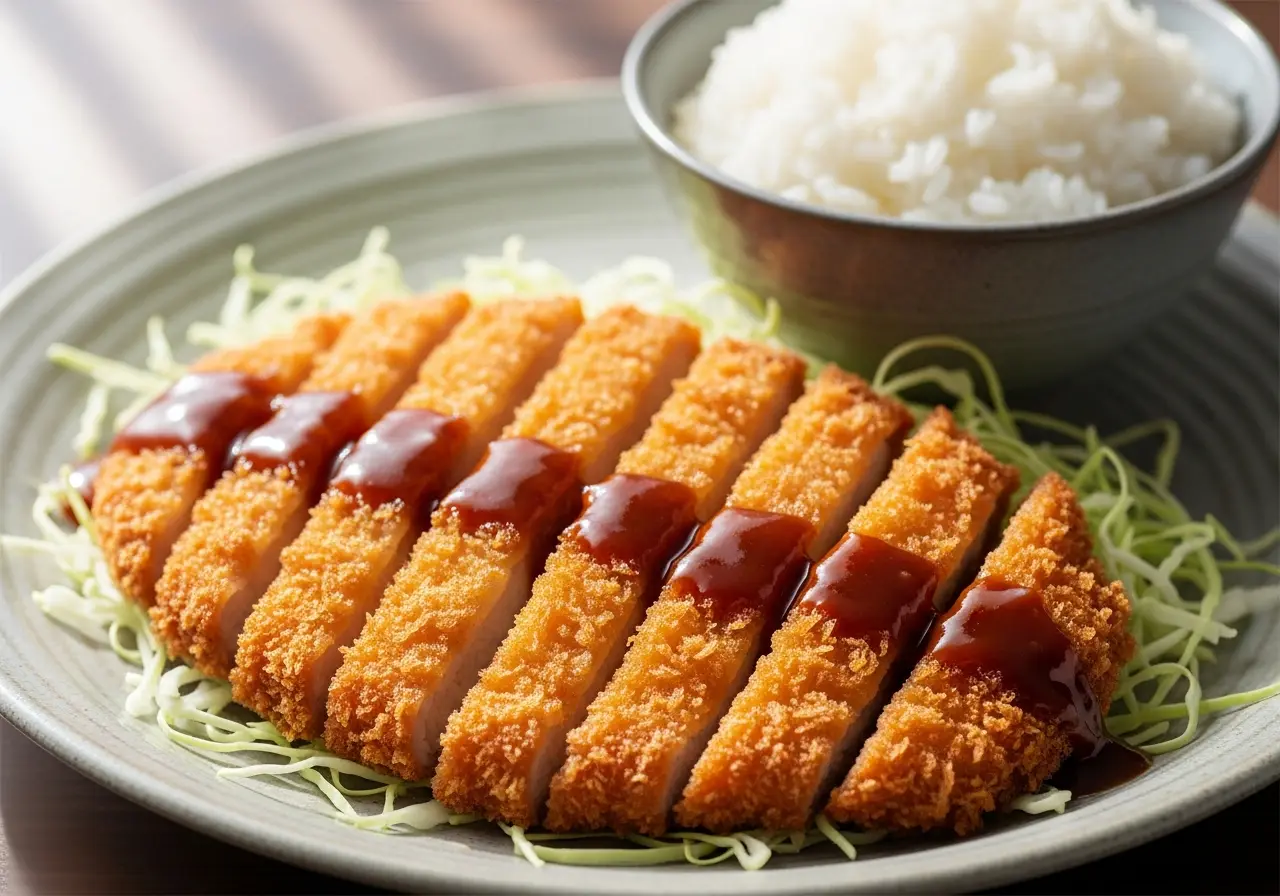
Japanese Chicken Katsu
Ingredients
Method
- Butterfly each chicken breast and pound to an even 1.5 cm thickness; season with salt and pepper.
- Set up three bowls: flour, beaten egg, panko. Coat each cutlet in flour, then egg, then press firmly into panko.
- Heat 1 cm of oil to 175°C in a wide pan.
- Fry the cutlets 3–4 minutes per side until deep golden and cooked through.
- Rest on a wire rack for 2 minutes, then slice into strips.
- Serve over rice with shredded cabbage and tonkatsu sauce.
Notes
Variations & substitutions
- Chicken Cut: While chicken breast is traditional, boneless, skinless chicken thighs can be used for a juicier, richer result. Pound them to an even thickness of about 1/2 inch.
- Gluten-Free: For a gluten-free katsu, use gluten-free panko breadcrumbs and a gluten-free all-purpose flour blend for dredging. The rest of the process remains the same.
- Seasoning Boost: Enhance the flavor by adding a pinch of garlic powder and/or white pepper to your flour dredge. A dash of grated fresh ginger in the egg wash can also add a subtle aromatic note.
- Frying Oil: Canola, vegetable, or grapeseed oil are excellent neutral-flavored oils for deep frying. Avoid olive oil due to its lower smoke point and distinct flavor.
- Sauce Alternatives: While Tonkatsu sauce is classic, consider serving with a bright ponzu sauce for a lighter, tangier profile, or alongside a Japanese curry for Chicken Katsu Curry.
- Non-Chicken Katsu: This breading technique can be applied to other proteins! Try pork loin (Tonkatsu), firm white fish fillets (Fish Katsu), or even firm tofu slices (Tofu Katsu).
What to serve with it
A well-rounded Japanese meal is all about balance, and Chicken Katsu is no exception. Traditionally, it’s served as the star of a set meal (teishoku), accompanied by an array of complementary dishes that cut through its richness and offer textural contrast. Here are the essential pairings for an authentic experience:
- Steamed Short-Grain Rice: Absolutely non-negotiable. The fluffy, slightly sticky rice provides a perfect neutral base and absorbs the sauce beautifully.
- Finely Shredded Cabbage: A mound of crisp, raw shredded cabbage is crucial. Its freshness and slight bitterness cut through the richness of the fried chicken. A light dressing like yuzu vinaigrette or simply a squeeze of lemon is often served alongside.
- Miso Soup: A warm, savory bowl of miso soup (often with tofu and wakame seaweed) provides umami depth and hydration, balancing the meal.
- Tonkatsu Sauce: The quintessential sweet and tangy sauce made from fruits and vegetables. You can buy good quality bottled versions or make your own from scratch.
- Japanese Pickles (Tsukemono): Small portions of pickled ginger (gari), daikon, or cucumber add a refreshing, tangy crunch that cleanses the palate.
- Japanese Potato Salad: Creamy, slightly sweet, and often studded with cucumber and ham, this is a popular side dish that adds another layer of comfort.
Make ahead, storage & reheating
- Make Ahead (Pre-Frying): You can pound the chicken and set up your dredging station up to an hour in advance. However, for the crispiest result, it’s best to dredge the chicken in panko just before frying. If you must dredge ahead, place the breaded cutlets on a wire rack over a baking sheet, cover loosely with plastic wrap, and refrigerate for no more than 2-3 hours to prevent the panko from becoming soggy.
- Storage (Cooked Katsu): Once cooked and cooled, transfer the katsu to an airtight container. It will keep in the refrigerator for up to 3-4 days. For longer storage, wrap individual cooled cutlets tightly in plastic wrap, then aluminum foil, and place them in a freezer-safe bag. Freeze for up to 1 month.
- Reheating (For Crispness): The key to reheating katsu is to restore its crisp exterior without drying out the chicken. Avoid the microwave, which will make it soggy.
- Oven Method: Preheat your oven to 375°F (190°C). Place the katsu on a wire rack set over a baking sheet (this allows air circulation for crispness). Reheat for 15-20 minutes, flipping halfway, until heated through and crisp.
- Air Fryer Method: Preheat your air fryer to 350°F (175°C). Place the katsu in a single layer in the basket. Cook for 8-10 minutes, flipping halfway, until golden and crisp.
- From Frozen: Reheat frozen katsu directly in the oven or air fryer, adding about 10-15 minutes to the cooking time, ensuring it reaches an internal temperature of 165°F (74°C).
Common mistakes to avoid
- Not Pounding Chicken Evenly: If your chicken breast isn’t pounded to a uniform 1/2-inch thickness, thinner parts will dry out while thicker sections remain undercooked. Use a meat mallet or rolling pin and pound between two sheets of plastic wrap.
- Insufficient Oil Temperature: Frying in oil that’s too cool (below 325°F/160°C) results in greasy, soggy katsu because the breading absorbs too much oil before it can crisp up. Use a thermometer to maintain a steady temperature between 325-350°F (160-175°C).
- Overcrowding the Pan: Adding too many cutlets at once drastically drops the oil temperature, leading to the same greasy, soggy problem. Fry in batches, leaving ample space between each piece, and allow the oil to recover its temperature between batches.
- Not Seasoning at Each Stage: Bland katsu is a common pitfall. Season the chicken itself with salt and pepper before dredging, and add a pinch of salt to your flour and egg wash. This builds layers of flavor.
- Cutting Immediately After Frying: Like any cooked meat, katsu needs to rest for 2-3 minutes after coming out of the oil. This allows the juices to redistribute throughout the chicken, resulting in a more tender and moist interior. Cutting too soon will cause the juices to run out, leaving the chicken dry.
- Using Regular Breadcrumbs: While you can, regular breadcrumbs will not yield the same light, airy, and super-crispy texture as Japanese panko. Panko’s larger, flakier structure is key to authentic katsu.
More questions
Why is my Chicken Katsu soggy?
Soggy katsu is usually a result of one or more issues: 1) The oil temperature was too low, causing the breading to absorb oil rather than crisp up. 2) You overcrowded the pan, dropping the oil temperature significantly. 3) The katsu wasn’t drained properly on a wire rack after frying. 4) It was covered immediately after frying, trapping steam and making it soggy. Ensure proper oil temperature (325-350°F/160-175°C), fry in batches, and drain on a wire rack.
Can I bake or air fry Chicken Katsu instead of deep frying?
Yes, you can, but be aware the texture will not be identical to deep-fried katsu; it will be less rich and slightly different in crispness. For baking, preheat your oven to 400°F (200°C), spray the breaded cutlets generously with cooking oil, and bake for 20-25 minutes, flipping halfway, until golden brown and cooked through. For air frying, preheat to 375°F (190°C), spray with oil, and air fry for 12-15 minutes, flipping halfway, until crisp.
What’s the best chicken cut for katsu?
Boneless, skinless chicken breast is the most traditional choice for Chicken Katsu due to its lean texture and ease of pounding into a uniform shape. However, boneless, skinless chicken thighs are an excellent alternative if you prefer a juicier, more flavorful, and slightly richer katsu. Whichever you choose, ensure it’s pounded to an even 1/2-inch thickness for consistent cooking.
