
Watch how to make it
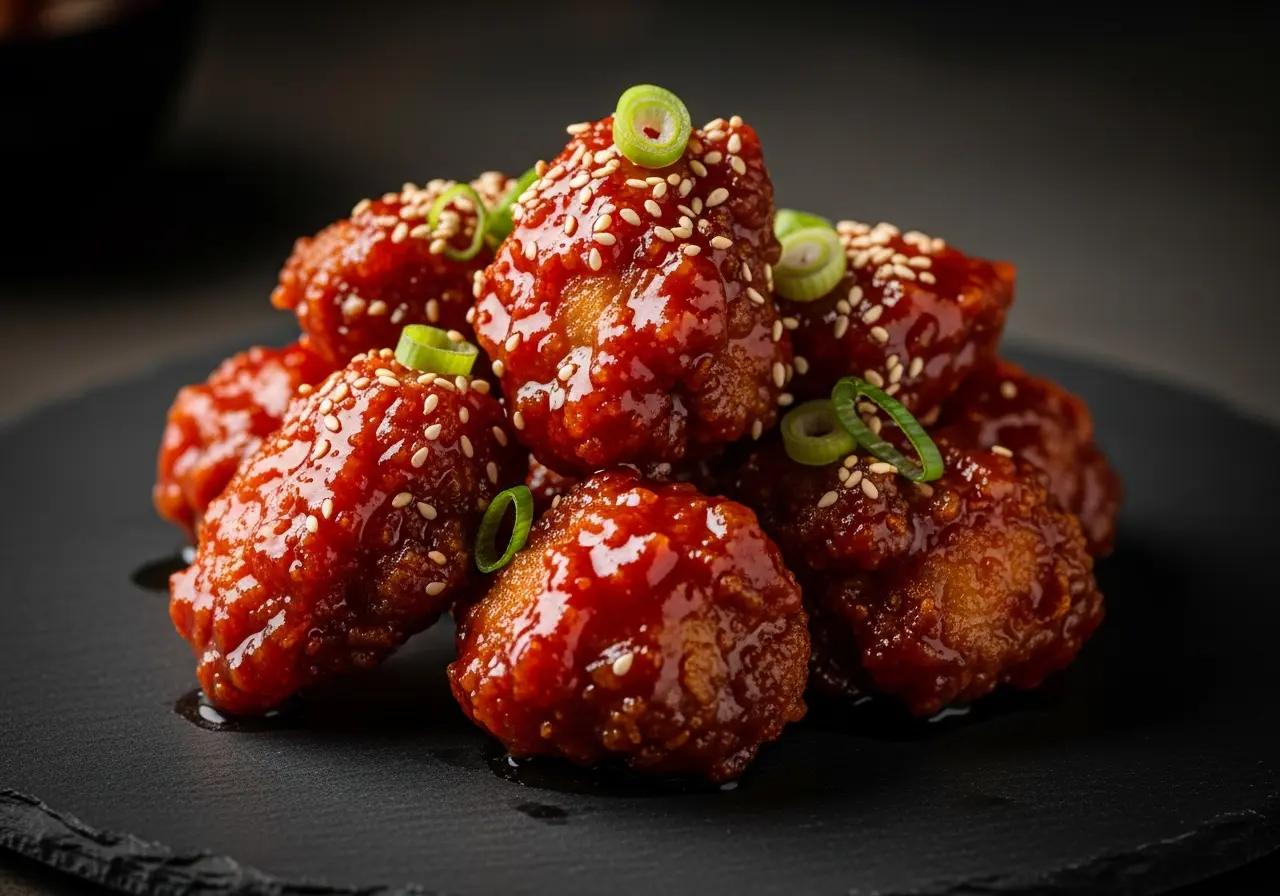
Korean fried chicken is famous for one thing: a crust that stays crackly even under a wet, sticky glaze. The secret is double-frying — once to cook, once to crisp — and a thin starch coating instead of heavy batter. Tossed in a gochujang-honey-garlic sauce, it’s the kind of chicken people fight over.
Why this recipe works
- Double-fry — the first fry cooks the chicken, the second (hotter) fry drives off moisture for a glassy crunch.
- Potato or corn starch, not flour — starch fries lighter and crisper and resists going soggy.
- Glaze off the heat — toss the chicken in warm (not boiling) sauce so the crust survives.
Key ingredients
Chicken wings or boneless thigh, potato starch, and a glaze built on gochujang, honey, soy sauce, garlic and rice vinegar. Full amounts in the recipe card below.
Tips from our kitchen
- Dry the chicken thoroughly before coating — surface moisture is the enemy of crunch.
- Keep the oil at 160°C for the first fry, then 190°C for the second.
- Make the sauce while the chicken rests between fries so everything comes together hot.
Frequently asked questions
Why double-fry?
The first fry at a lower temperature cooks the meat through; the second at a higher temperature blisters and dehydrates the crust so it stays crunchy under the glaze.
Can I bake or air-fry instead?
You can air-fry for a lighter version, but you won’t get the same glassy crust. Toss air-fried pieces in the glaze just before serving.
How do I keep it crispy?
Glaze only what you’ll eat immediately, and toss in warm rather than simmering sauce.
Korean Fried Chicken (Dakgangjeong)
Ingredients
Method
- Pat the chicken very dry, season with salt and pepper, then toss in potato starch to coat.
- Heat oil to 160°C and fry the chicken in batches for 7–8 minutes; remove and rest 5 minutes.
- Meanwhile, simmer the gochujang, honey, soy sauce, vinegar and garlic until glossy; keep warm.
- Raise the oil to 190°C and fry the chicken a second time for 3–4 minutes until deep golden and crisp.
- Toss the hot chicken in the warm glaze, then finish with sesame seeds and scallions.
Notes
Variations & substitutions
- Chicken Cut: While boneless, skinless thighs are our top recommendation for their tenderness and moisture, you can certainly use boneless breast for a leaner option. Just be mindful to reduce frying time slightly to prevent drying out. Chicken wings (drumettes and flats) also work beautifully, offering a more traditional fried chicken experience, though they require a bit more sauce per piece due to bone-in structure.
- Spice Level: Adjust the amount of gochugaru (Korean chili flakes) to your preference. For a milder version, reduce it by half. For a fiery kick, add an extra teaspoon or two. You can also incorporate a small amount (1/2 teaspoon) of gochujang (Korean chili paste) into the sauce for a deeper, fermented chili flavor, but be aware it will thicken the sauce slightly.
- Sweetness: Our recipe balances sweetness perfectly, but if you prefer it less sweet, reduce the corn syrup or sugar by 1-2 tablespoons. Conversely, for a sweeter glaze, add another tablespoon of corn syrup. Honey can be a substitute for corn syrup, but it will yield a slightly different flavor profile.
- Gluten-Free: To make this recipe gluten-free, substitute the all-purpose flour in the coating with an equal amount of rice flour or a gluten-free all-purpose blend. Ensure your soy sauce is replaced with tamari or a certified gluten-free soy sauce.
- Vegetarian/Vegan: This technique works wonderfully with firm tofu or king oyster mushrooms. For tofu, press it thoroughly to remove excess water, then cut into bite-sized pieces and proceed with the dredging and frying steps. For king oyster mushrooms, slice them into rounds or planks. Adjust frying times accordingly until golden and crisp.
What to serve with it
Dakgangjeong is a star dish, but in Korean cuisine, balance is key. It’s often enjoyed as part of a larger meal, alongside various banchan (side dishes) that offer contrasting textures and flavors, cutting through the richness of the fried chicken. A simple bowl of steamed rice is almost always present to soak up any extra sauce and provide a neutral base. For a truly authentic experience, pair it with these traditional accompaniments:- Steamed White Rice: An absolute essential. Its mild flavor and soft texture perfectly complement the crispy, saucy chicken.
- Kimchi: Whether it’s classic napa cabbage kimchi or kkakdugi (diced radish kimchi), its spicy, sour, and fermented notes are a fantastic counterpoint to the sweet and savory chicken.
- Pickled Radish (Danmuji): The bright yellow, thinly sliced pickled daikon radish offers a refreshing crunch and tangy sweetness that cleanses the palate.
- Simple Green Salad: A light, fresh salad with a clear, tangy dressing (like a soy-ginger vinaigrette) provides a welcome textural and flavor contrast.
- Korean Beer (Maekju) or Soju: For adults, a cold bottle of Hite or Cass beer, or a shot of chilled soju, is the classic beverage pairing with Korean fried chicken.
Make ahead, storage & reheating
Dakgangjeong is undeniably best enjoyed fresh, straight from the wok, when the chicken is at its crispiest and the sauce is perfectly glazed. However, some components can be prepared in advance, and leftovers can be stored and reheated with specific methods to minimize texture loss.- Make Ahead: The sauce can be made up to 3 days in advance and stored in an airtight container in the refrigerator. Gently reheat it over low heat, stirring frequently, before tossing with freshly fried chicken. The chicken itself should ideally be fried just before serving for optimal crispness.
- Storage (Cooked Chicken): Store any leftover Dakgangjeong in an airtight container in the refrigerator for up to 2-3 days. While the chicken will lose some of its initial crispness, the flavor remains delicious. Freezing is generally not recommended for fried chicken as it significantly degrades the texture upon thawing and reheating.
- Reheating: To restore as much crispness as possible, avoid the microwave. The best methods are:
- Air Fryer: Preheat to 350°F (175°C). Arrange chicken in a single layer and air fry for 5-8 minutes, or until heated through and crisp.
- Oven: Preheat oven to 375°F (190°C). Spread chicken on a baking sheet lined with parchment paper. Bake for 10-15 minutes, flipping halfway, until hot and somewhat crispy.
Common mistakes to avoid
- Overcrowding the Fryer: This is a cardinal sin of frying. Adding too much chicken at once drastically drops the oil temperature, leading to greasy, soggy chicken that doesn’t crisp up properly. Fry in small batches, ensuring there’s plenty of space around each piece.
- Skipping the Double Fry: The signature ultra-crisp texture of Dakgangjeong comes from frying the chicken twice. The first fry cooks the chicken through, and the second fry, at a higher temperature, crisps up the coating and expels any remaining moisture. Don’t skip this crucial step!
- Not Drying the Chicken Thoroughly: Any excess moisture on the chicken before dredging will cause the coating to become gummy, prevent it from adhering properly, and can lead to dangerous oil splattering. Pat the chicken pieces bone-dry with paper towels before seasoning and dredging.
- Using the Wrong Starch: While all-purpose flour can work, using a combination of all-purpose flour and potato starch (or cornstarch) is key for the distinctively light, airy, and incredibly crispy crust. Potato starch, in particular, contributes to that unique Korean fried chicken texture.
- Tossing with Cold Sauce: For the best adherence and a beautiful glaze, the sauce should be warm when you toss the freshly fried chicken in it. A cold sauce will clump and won’t coat the chicken as evenly or effectively, potentially making the chicken less crispy faster.
More questions
Can I make Dakgangjeong without deep-frying?
While deep-frying yields the most authentic and superior result in terms of crispness and texture, you can achieve a respectable version using an air fryer or oven. For an air fryer, toss the dredged chicken with 1-2 tablespoons of oil, then air fry at 375°F (190°C) for 18-25 minutes, flipping halfway, until golden and cooked through. For oven baking, toss with oil and bake at 400°F (200°C) for 25-35 minutes, flipping once. In both cases, you’ll still want to do a ‘double-fry’ equivalent by increasing the temperature for the last 5-7 minutes to enhance crispness before tossing in the warm sauce.
What’s the difference between Dakgangjeong and Yangnyeom Chicken?
Both are popular Korean fried chicken dishes with a sauce coating, but they have distinct characteristics. Dakgangjeong typically features smaller, often boneless pieces of chicken with an extra-crispy, almost candy-like crust, coated in a thinner, often sweeter and tangier glaze that hardens slightly. Yangnyeom Chicken, on the other hand, usually uses larger, sometimes bone-in pieces, and is known for its thicker, richer, and often spicier sauce that’s more savory and complex, sometimes including gochujang and various aromatics, and often garnished with peanuts.
How do I get the sauce to stick perfectly to the chicken?
The key to a perfectly coated Dakgangjeong is timing and temperature. First, ensure your chicken is fried to maximum crispness and drained very well of excess oil immediately after its second fry. Second, make sure your sauce is warm when you’re ready to toss. The residual heat from the freshly fried chicken, combined with the warmth of the sauce, helps the glaze adhere beautifully and caramelize slightly, creating that irresistible sticky-crisp exterior. Toss quickly and evenly in a large bowl or wok to coat every piece.
