Authentic Vietnamese recipes — pho, banh mi, fresh spring rolls and more, with tested instructions and the techniques behind every dish.
Watch how to make it
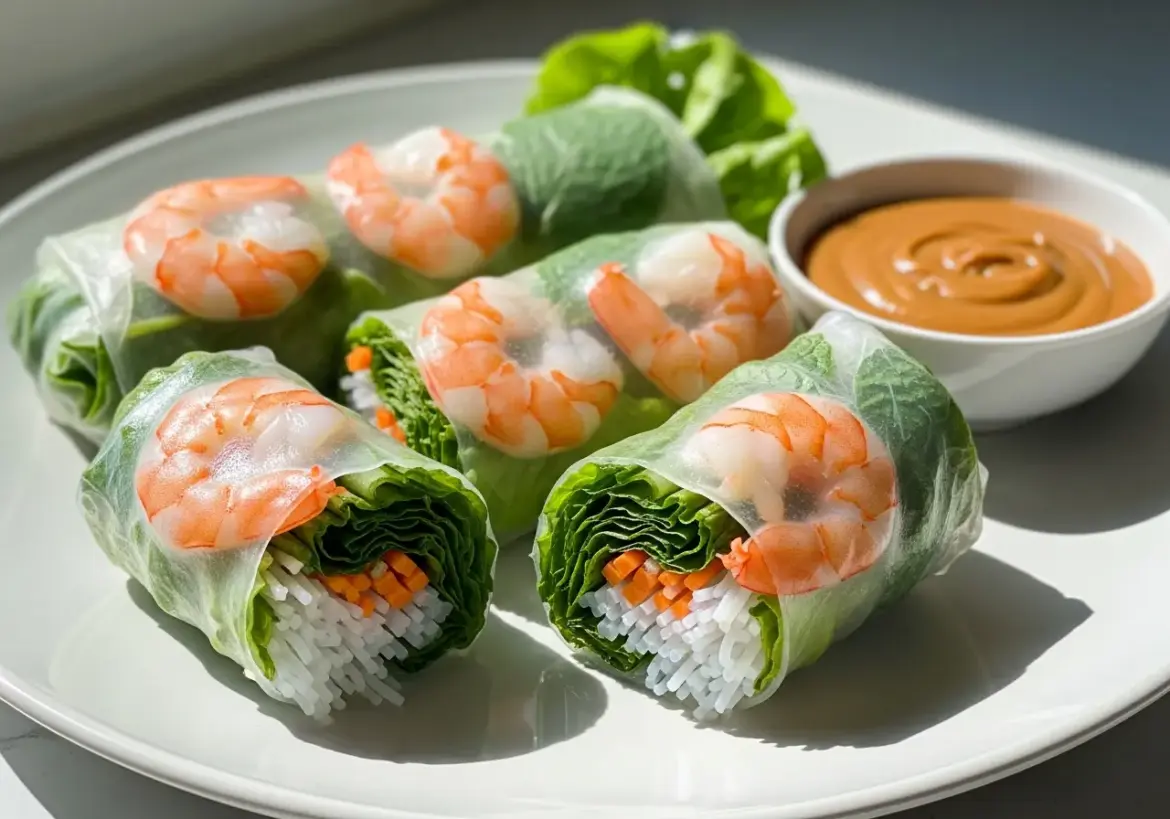
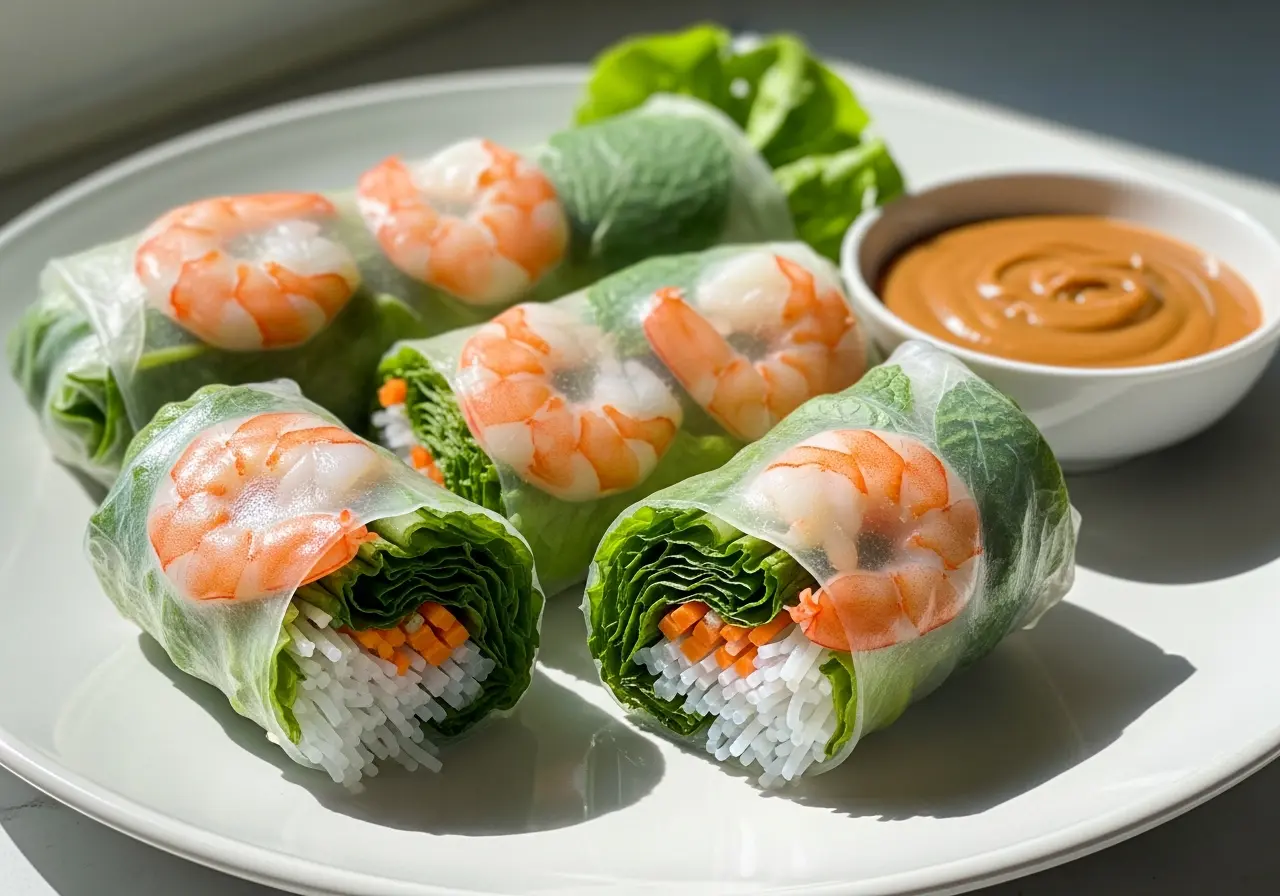
Goi cuon — Vietnamese fresh spring rolls — are everything fried rolls aren’t: cool, crunchy, herbaceous, and light. Translucent rice paper wraps poached shrimp, rice vermicelli, lettuce and a fistful of fresh herbs, all dunked in a rich peanut-hoisin sauce. They look impressive but are genuinely easy once you get the rolling rhythm.
Why this recipe works
- Soak rice paper briefly — a 2-second dip; it keeps softening as you fill, so don’t oversoak or it tears.
- Layer for looks — place shrimp pink-side down against the wrapper so they show through.
- Herbs are not optional — mint, cilantro and Thai basil are what make it taste Vietnamese.
Key ingredients
Round rice paper wrappers, shrimp, rice vermicelli, lettuce, mint, cilantro, and a dipping sauce of hoisin, peanut butter and a splash of fish sauce. Full amounts in the recipe card below.
Tips from our kitchen
- Work on a damp kitchen towel — it stops the wrappers sticking and tearing.
- Don’t overfill; a slim roll is easier to wrap tightly and won’t split.
- Cover finished rolls with a damp cloth so they don’t dry out before serving.
Frequently asked questions
Can I make them ahead?
Best eaten within a few hours. Store covered with a damp paper towel and plastic wrap in the fridge so the wrappers stay supple.
What protein can I use instead of shrimp?
Poached chicken, sliced pork belly, tofu, or just extra vegetables all work beautifully.
Why do my wrappers tear?
Usually from oversoaking. Dip for only 1–2 seconds — the paper continues to soften as you fill and roll.
Vietnamese Fresh Spring Rolls (Goi Cuon)
Ingredients
Method
- Halve the poached shrimp lengthwise. Cook and cool the vermicelli; prep the herbs and lettuce.
- Whisk the hoisin, peanut butter, fish sauce, garlic and warm water into a smooth dipping sauce; top with crushed peanuts.
- Dip one rice paper in warm water for 1–2 seconds and lay on a damp towel.
- Place shrimp halves pink-side down, then add lettuce, vermicelli and herbs in the lower third.
- Fold the bottom over the filling, fold in the sides, and roll up tightly.
- Repeat, keeping finished rolls under a damp cloth. Serve with the peanut sauce.
Notes
Poach shrimp in salted water for 2 minutes until just pink; overcooked shrimp turn rubbery.
Variations & Substitutions
Protein Power-Ups: While classic goi cuon features shrimp and pork, feel free to experiment. Thinly sliced grilled chicken or beef (marinated with lemongrass and garlic) works beautifully. For a vegetarian option, pan-fried or baked tofu (pressed and marinated in soy sauce, sesame oil, and a touch of sugar) is an excellent substitute, providing a satisfying chew.
Herbaceous Adventures: Don’t limit yourself to just mint and cilantro. Add perilla leaves (tía tô) for a distinctive peppery, minty flavor, or Vietnamese balm (kinh giới) for a lemony zest. A mix of several herbs adds layers of complexity.
Veggie Variety: Beyond lettuce and cucumber, consider adding julienned carrots for a pop of color and sweetness, blanched bean sprouts for extra crunch, or even thinly sliced bell peppers. Ensure all vegetables are cut into thin, manageable strips to avoid tearing the delicate rice paper.
Noodle Nuances: If you prefer a lighter roll, reduce the amount of vermicelli noodles or omit them entirely, replacing with more vegetables. Conversely, for a more substantial roll, increase the noodle portion slightly.
What to Serve With It
Vietnamese Fresh Spring Rolls are the quintessential light appetizer, perfectly setting the stage for a more robust meal. Their refreshing qualities make them an ideal counterpoint to richer, spicier, or heartier Vietnamese dishes. While they shine brightest with their traditional peanut dipping sauce (tương chấm gỏi cuốn) or fish sauce vinaigrette (nước chấm), consider them the opening act to a symphony of flavors.
Phở: The ultimate pairing. The freshness of the rolls balances the rich, savory broth of a classic beef or chicken phở.
Bún Chả: Grilled pork patties and noodles, often served with a dipping sauce. Goi Cuon offers a crisp counterpoint.
Bánh Xèo: Savory Vietnamese crepes. The lightness of the rolls provides a refreshing contrast to the crispy, fried nature of bánh xèo.
Cơm Tấm (Broken Rice): A popular rice dish with various grilled meats. The rolls make a great starter.
Vietnamese Iced Coffee (Cà Phê Sữa Đá): A surprisingly delightful pairing, the strong, sweet coffee provides a robust complement to the delicate flavors of the rolls.
Make Ahead, Storage & Reheating
Fresh spring rolls, as their name suggests, are best enjoyed immediately after rolling. However, with proper storage, you can prepare them a few hours in advance, or even the day before, for convenience.
Make Ahead (Same Day): If making a few hours in advance, lightly brush each roll with a tiny amount of neutral oil (like canola or grapeseed) to prevent sticking and drying. Arrange them in a single layer on a plate or in an airtight container, ensuring they don’t touch. Cover tightly with plastic wrap or a lid, pressing the wrap directly onto the rolls to minimize air exposure. Refrigerate for up to 4-6 hours.
Storage (Overnight): For longer storage (up to 24 hours), the same method applies, but be aware that the rice paper may firm up slightly and the herbs might lose some of their vibrancy. The rolls will still be delicious, but the texture won’t be as yielding as freshly made. Do not store for longer than 24 hours, as the ingredients can start to break down and the rice paper can become unpleasantly chewy.
Freezing: Freezing is NOT recommended for fresh spring rolls. The delicate rice paper will become brittle and crack upon thawing, and the fresh vegetables will turn mushy.
Reheating: Fresh spring rolls are served cold or at room temperature; they are not meant to be reheated. If they’ve been refrigerated, simply let them sit at room temperature for 10-15 minutes before serving to soften the rice paper slightly.
Common Mistakes to Avoid
Over-soaking the Rice Paper: This is the number one culprit for torn or gummy rolls. Rice paper should only be dipped in warm water for 10-15 seconds, or until pliable but still slightly firm. It will continue to soften as you fill and roll. Over-soaked paper becomes sticky, difficult to handle, and prone to tearing.
Overfilling: It’s tempting to pack in all those delicious ingredients, but too much filling makes the rolls impossible to seal neatly and causes the rice paper to burst. Aim for a modest, compact line of ingredients that allows for at least 1.5-2 inches of clear rice paper on either side for folding.
Uneven Ingredient Distribution: For a beautiful, uniform roll, ensure your ingredients (especially the shrimp and herbs) are placed strategically. Lay shrimp cut-side up and herbs first on the bottom third of the wrapper, then add noodles and other vegetables. This ensures the vibrant colors show through the translucent wrapper.
Not Chilling Cooked Ingredients: Warm shrimp or pork will steam inside the roll, causing condensation and making the rice paper sticky and the roll soggy. Always ensure all cooked proteins are thoroughly chilled before assembly.
Rolling Too Loosely or Too Tightly: A roll that’s too loose will fall apart, while one that’s too tight will tear. Aim for a firm, snug roll that holds its shape but doesn’t strain the rice paper. Practice makes perfect!
More Questions
How do I prevent my rolls from sticking to each other or the plate?
A: The best way is to lightly brush each finished roll with a tiny amount of neutral oil (like canola, grapeseed, or even a very light sesame oil) before arranging them. Place them in a single layer on a serving platter or in an airtight container, ensuring they don’t touch. If stacking is unavoidable, place a piece of parchment paper or plastic wrap between layers. Using a non-stick surface for rolling can also help during assembly.
Can I use different types of wrappers?
A: For authentic Vietnamese fresh spring rolls (Goi Cuon), traditional round or square rice paper wrappers (bánh tráng) are essential. They are made from rice flour, water, and salt, and sometimes tapioca starch for extra elasticity. Other wrappers like lumpia wrappers or spring roll pastry are meant for frying and will not work for fresh rolls, as they are not designed to be rehydrated and eaten raw.
My rice paper keeps tearing. What am I doing wrong?
A: Tearing is usually due to one of three reasons: 1) Over-soaking: The paper becomes too delicate. Dip briefly, it will soften further. 2) Overfilling: Too much pressure on the wrapper. Use less filling. 3) Sharp edges: Ensure all your ingredients are cut into thin, smooth strips without sharp points that could pierce the paper. Also, be gentle when handling and rolling.