
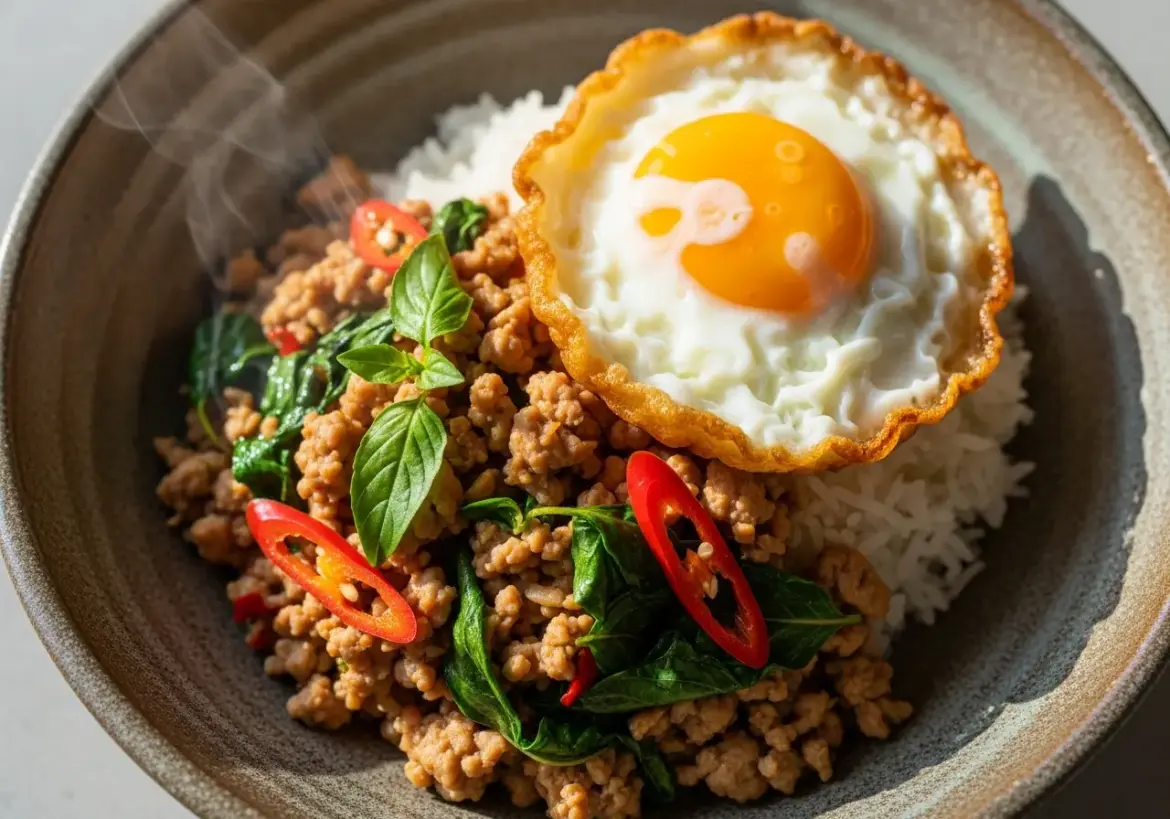
Thai food is the art of balancing four tastes at once — hot, sour, salty and sweet — in a single, vivid mouthful. From coconut curries to fiery stir-fries and tangy salads, it is bold, fragrant and surprisingly fast to cook once your pantry is stocked. Here is how to build authentic Thai flavor at home.
Essential Thai ingredients
Thai cooking leans on fish sauce, palm sugar, lime, fresh chilies, lemongrass, galangal, kaffir lime leaves and curry pastes. Coconut milk softens curries; holy and sweet basil finish stir-fries.
Thai recipes to start with
Roll up your sleeves with our tested Thai recipes — each with step-by-step instructions, a printable recipe card and pro tips:
- Thai Basil Chicken (Pad Krapow Gai)
- Thai Green Curry (Gaeng Keow Wan)
- Authentic Pad Thai (Thai Noodles)
Thai cooking techniques
- Pound your aromatics in a mortar to release far more flavor than chopping.
- Bloom curry paste in thick coconut cream until the oil splits.
- Balance at the end — adjust fish sauce, sugar and lime until all four tastes sing.
Frequently asked questions
How spicy is authentic Thai food?
It can be very spicy, but heat is adjustable — start with fewer chilies and build up.
What is the difference between holy basil and Thai sweet basil?
Holy basil is peppery and clove-like (used in pad krapow); sweet basil is aniseed-sweet (used in curries).
What makes Thai cooking special
At its heart, Thai cooking is a masterful symphony of contrasting and complementary flavors, aiming for a harmonious balance across sour, sweet, salty, and spicy notes in almost every dish. What truly sets it apart is not just the vibrant heat of chilies, but the intricate interplay of fresh herbs like lemongrass, galangal, kaffir lime leaves, and cilantro, often pounded into aromatic pastes that form the soul of curries and stir-fries. This emphasis on fresh, aromatic ingredients, combined with the umami depth of fish sauce and the bright tang of lime, creates a multi-layered sensory experience. Thai cuisine is also defined by its communal dining style, where a variety of dishes with different textures and flavor profiles are shared, allowing diners to create their own perfect bite with each spoonful, making every meal an adventure in balance and discovery.
Regional styles to know
- Central Thai Cuisine: Often considered the most refined and globally recognized, it features a balanced use of coconut milk, fragrant herbs, and a harmonious blend of all four fundamental tastes. Dishes like Green Curry and Tom Yum Goong are prime examples.
- Northern Thai Cuisine: Influenced by neighboring Laos and Myanmar, this style uses less coconut milk and more bitter, sour, and fermented flavors. Sticky rice is the staple, and dishes like Khao Soi (curry noodle soup) and Sai Oua (herbal sausage) are characteristic.
- Northeastern (Isaan) Cuisine: Known for its fiery spice, pungent fermented flavors (like pla ra), and grilled meats. It’s a very rustic and bold cuisine, with sticky rice as the primary accompaniment. Som Tum (papaya salad) and Larb (minced meat salad) are iconic Isaan dishes.
- Southern Thai Cuisine: Characterized by its intense heat, liberal use of fresh turmeric, and an abundance of seafood due to its coastal location. Curries are often very rich and spicy, like Gaeng Tai Pla (fermented fish innards curry), and feature unique ingredients like sator beans.
Tips for cooking Thai food at home
- Embrace Mise en Place: Thai cooking, especially stir-fries and curries, moves quickly. Have all your ingredients chopped, measured, and ready before you start cooking. This prevents burning and ensures even cooking.
- Taste and Adjust Constantly: The true art of Thai cooking lies in balancing the four core flavors (sour, sweet, salty, spicy). Don’t be afraid to taste your dish throughout the cooking process and adjust with a squeeze of lime, a dash of fish sauce, a pinch of sugar, or more chili.
- Invest in Quality Fish Sauce: Fish sauce is the backbone of Thai savory dishes. A good quality, clear amber fish sauce with a clean, briny aroma (rather than overly pungent) will elevate your cooking significantly. Look for brands with high protein content.
- Don’t Overcrowd the Wok/Pan: When stir-frying, cook in batches if necessary. Overcrowding lowers the pan’s temperature, steaming the ingredients instead of searing them, which leads to soggy results.
- Fresh is Best for Aromatics: While dried spices have their place, the vibrant flavors of Thai cuisine come alive with fresh lemongrass, galangal, kaffir lime leaves, and cilantro. Seek them out for an authentic taste.
More frequently asked questions
How can I adjust the spice level of a Thai dish?
There are several ways to control the heat. For curries or stir-fries using a paste, you can reduce the amount of chili paste used, or opt for a milder store-bought paste. If adding fresh chilies, simply use fewer or remove the seeds and membranes, which hold most of the capsaicin. If a dish turns out too spicy, you can temper the heat by adding more coconut milk (for curries), a squeeze of lime juice, a touch of sugar, or serving it with extra plain rice, fresh cucumber slices, or a dollop of plain yogurt (though not traditionally Thai, it works!).
Can I make Thai dishes vegetarian or vegan?
Absolutely! Many Thai dishes can be easily adapted. Substitute meat with tofu, tempeh, mushrooms, or a variety of vegetables. The main non-vegan ingredient to watch out for is fish sauce (nam pla). Replace it with a good quality vegan fish sauce (often made from seaweed and mushroom extracts), light soy sauce, or tamari for a similar umami depth. Ensure your curry pastes are also vegan; some store-bought varieties may contain shrimp paste (kapi), so check the ingredients list or make your own from scratch using vegetarian alternatives.
Why does my coconut milk sometimes separate in curries, and how can I prevent it?
Coconut milk separating into a clear oil layer and a thicker cream layer (often called “cracking the coconut milk”) is actually a desired effect in authentic Thai curries, as it indicates the fat has rendered out, intensifying the flavor and aroma of the curry paste. To achieve this, start by sautéing your curry paste in the thickest part of the coconut milk (the cream that rises to the top) over medium heat until the oil separates and the paste becomes very fragrant. To prevent excessive separation if you prefer a creamier texture, add the coconut milk gradually and avoid boiling it too vigorously after adding. Stirring frequently can also help maintain emulsion.