
Watch how to make it
Banh mi is the legendary Vietnamese sandwich — a crackly baguette stuffed with savory protein, tangy pickled daikon and carrot, cucumber, cilantro, chili and a swipe of pâté and mayo. It’s the perfect marriage of French technique and Vietnamese flavor, and it comes together fast once your pickles are ready.
Pairs perfectly with our pho bo for a full Vietnamese spread.
Why this recipe works
- Quick-pickled daikon and carrot (do chua) cut the richness and add crunch.
- A light, airy baguette — toasted until shatteringly crisp — is non-negotiable.
- Layered fat + acid + herbs gives that signature balanced bite.
Key ingredients
Baguette, your protein (grilled pork, lemongrass chicken, or pâté + cold cuts), daikon, carrot, cucumber, cilantro, jalapeño, mayonnaise and Maggi or soy sauce. The do chua pickle is the heart of it.
Tips from our kitchen
- Make a big jar of do chua — it keeps for weeks and improves after a day.
- Hollow out a little of the bread so the fillings sit snugly.
- Toast the baguette right before assembling for maximum crunch.
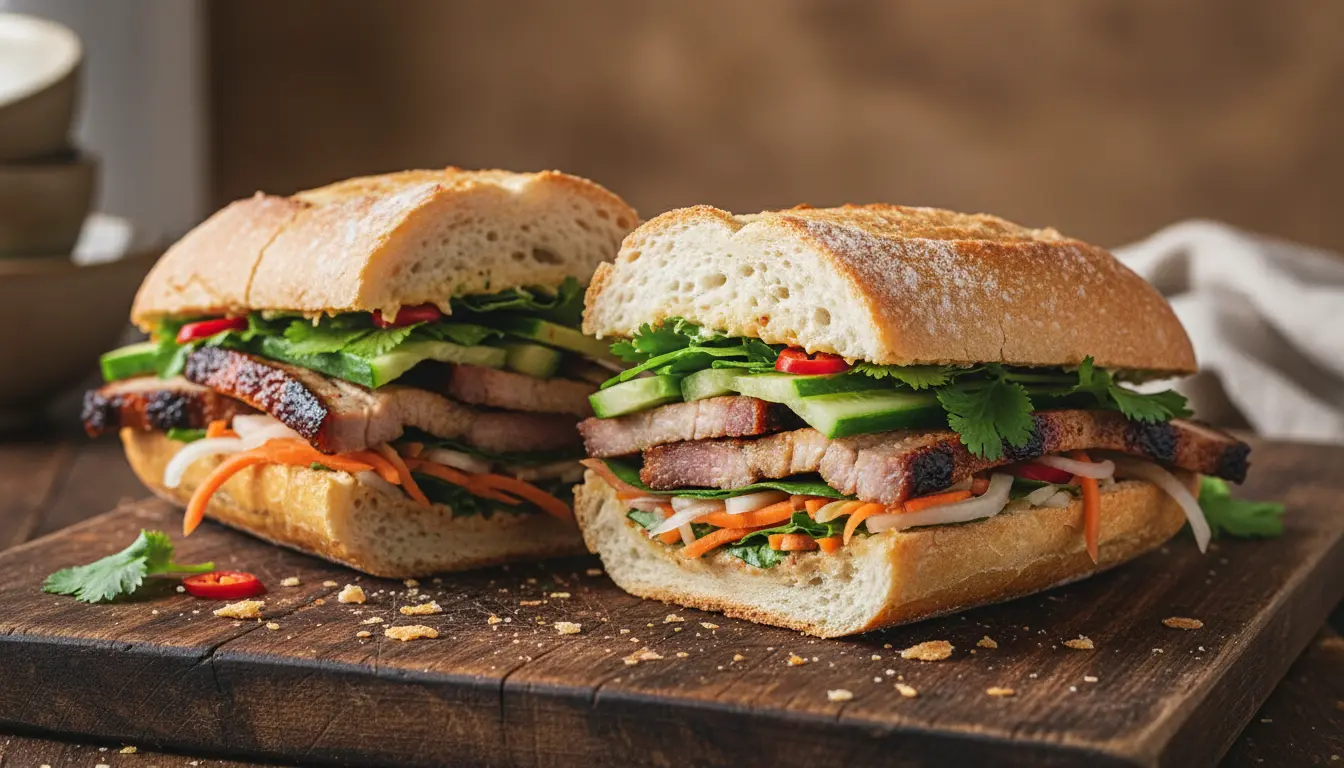
Vietnamese Banh Mi
Ingredients
Method
- Make do chua: toss carrot and daikon with vinegar, sugar and a pinch of salt; rest 30 min.
- Toast the baguettes until crisp; slice open and hollow slightly.
- Spread mayonnaise inside.
- Layer the protein, drained do chua, cucumber, cilantro and jalapeno.
- Close, press gently and serve immediately.
Notes
Frequently asked questions
What bread is authentic?
A Vietnamese baguette is lighter and airier than a French one, with a thin crackly crust. A light, fresh baguette or a soft sub roll is the best substitute.
How long does do chua keep?
Refrigerated, the pickled daikon and carrot keep about three weeks and taste best after the first day.
Best protein for beginners?
Lemongrass grilled chicken or pork is easy and forgiving. Vegetarians can use seasoned tofu or a fried egg.
Variations & substitutions
The beauty of Banh Mi lies in its adaptability. While the classic cold cut (Banh Mi Đặc Biệt) is iconic, don’t hesitate to explore these delicious and authentic variations:
- Proteins: Swap out the grilled pork for succulent Thịt Nướng (grilled lemongrass pork), savory Gà Xé (shredded chicken), crispy Đậu Hũ Chiên (fried tofu) for a vegetarian option, or even a simple Trứng Ốp La (fried egg) for a breakfast-style Banh Mi. Canned sardines in tomato sauce (Cá Mòi) are also a popular, quick filling.
- Pickled Vegetables: While daikon and carrot are standard, you can add thin slices of jicama for extra crunch, or even a touch of shredded red cabbage for color and a slightly different tang.
- Herbs: Beyond cilantro, a few sprigs of fresh mint or Thai basil can introduce a new aromatic dimension.
- Sauces: Experiment with different chili sauces beyond Sriracha, or add a touch of Hoisin sauce for a sweeter, richer note, especially with grilled pork. A drizzle of high-quality fish sauce (nước mắm) mixed with a little sugar and lime can also enhance the savory profile.
- Bread: If a true Vietnamese baguette is unavailable, a good quality, crusty French baguette will work, but aim for one that’s lighter and airier rather than dense and chewy.
What to serve with it
Banh Mi is often enjoyed as a standalone meal, a perfect grab-and-go street food. However, to complete the authentic Vietnamese experience, pair it with refreshing beverages or light accompaniments that balance its rich, savory, and spicy flavors.
- Vietnamese Iced Coffee (Cà Phê Sữa Đá): The quintessential pairing. The strong, sweet, and creamy coffee cuts through the richness of the sandwich beautifully.
- Fresh Coconut Water (Nước Dừa Tươi): Hydrating and naturally sweet, it’s a perfect refreshing counterpoint, especially on a warm day.
- Sugarcane Juice (Nước Mía): Another popular street drink, it’s incredibly sweet and refreshing, often served with a squeeze of kumquat or lime.
- Limeade (Nước Chanh): A simple, tart, and sweet drink that cleanses the palate.
- Fresh Fruit: Sliced mango, pineapple, or dragon fruit can offer a light, sweet finish.
- Chè (Sweet Dessert Soup/Pudding): For a truly authentic experience, follow your Banh Mi with a bowl of Chè, a diverse category of Vietnamese sweet desserts.
Make ahead, storage & reheating
While Banh Mi is best enjoyed freshly assembled, many of its components can be prepared in advance to streamline your sandwich-making process:
- Cooked Meats: Grilled pork, shredded chicken, or fried tofu can be cooked up to 3-4 days in advance. Store them in an airtight container in the refrigerator. Reheat gently in a pan over medium heat for 3-5 minutes, or microwave in 30-second intervals until just warm, before assembling.
- Pickled Vegetables (Đồ Chua): These are fantastic for make-ahead! Prepare them up to 1-2 weeks in advance and store in a sealed jar in the refrigerator. They actually improve in flavor over time.
- Pâté/Mayonnaise Spreads: Pre-mix your mayonnaise and any other sauces. Store in separate airtight containers in the fridge for up to a week.
- Herbs: Wash and thoroughly dry cilantro, mint, or basil. Wrap loosely in a damp paper towel and store in a zip-top bag in the refrigerator for 3-5 days.
- Assembled Sandwich: This is NOT recommended for make-ahead. The crisp baguette will quickly become soggy from the fillings and sauces, especially the pickled vegetables. For optimal texture and flavor, always assemble your Banh Mi right before eating. If you must, consume within 1-2 hours of assembly.
- Freezing: Do not freeze assembled Banh Mi or the baguettes. The texture will be ruined. Cooked meats can be frozen for up to 1 month, then thawed overnight in the fridge and reheated as above.
Common mistakes to avoid
Even a seemingly simple sandwich can go wrong. Avoid these common pitfalls to ensure your homemade Banh Mi is as authentic and delicious as possible:
- Using the Wrong Bread: This is perhaps the biggest mistake. A soft, dense, or overly chewy baguette will not give you the characteristic light, airy interior and shatteringly crisp crust essential for Banh Mi. Seek out a Vietnamese-style baguette (often made with a mix of wheat and rice flour) or a very light, crusty French baguette.
- Skipping the Maggi Seasoning: Maggi is not just a condiment; it’s a flavor enhancer that provides a crucial umami depth. A few dashes on the bread before adding fillings makes a significant difference. Don’t omit it!
- Forgetting the Fat Layer: A thin, even layer of Vietnamese pâté (pâté gan) and/or a rich mayonnaise (often Kewpie or a homemade version) on both sides of the baguette is non-negotiable. It adds moisture, richness, and binds the flavors together.
- Over-stuffing the Sandwich: While tempting, too many fillings can make the sandwich difficult to eat and overwhelm the delicate balance of flavors and textures. Aim for a harmonious ratio, allowing each ingredient to shine.
- Not Toasting the Baguette (or over-toasting): A quick toast (2-3 minutes at 350°F/175°C or a few seconds under a broiler until just warm and crisp) is key to reviving the baguette’s crust and warming the interior. Don’t let it get hard or burnt.
- Cold Fillings (especially the meat): While some components are cold (pickles, herbs), the main protein (pork, chicken, tofu) should ideally be served warm to enhance its flavor and aroma, creating a more satisfying contrast with the cool vegetables.
More questions
What makes a Vietnamese baguette different from a French baguette?
Vietnamese baguettes, often called bánh mì Sài Gòn, are distinct from their French counterparts primarily due to their flour composition. They typically incorporate a blend of wheat flour with a small percentage of rice flour. This unique mix results in a much lighter, airier crumb and a thinner, more delicate, and shatteringly crisp crust. French baguettes, made solely with wheat flour, tend to be denser, chewier, and have a thicker crust. The Vietnamese version is specifically designed to be easily bitten through without tearing the inside of your mouth, making it perfect for sandwich filling.
Can I make Banh Mi vegetarian or vegan?
Absolutely! Banh Mi is incredibly versatile for plant-based diets. For a vegetarian version, swap out the meat for crispy fried tofu (đậu hũ chiên), marinated and grilled tempeh, or a savory mushroom stir-fry. Ensure your mayonnaise is egg-free if going vegan, and omit the pâté. The pickled vegetables, fresh herbs, and spicy chili sauce remain essential for that authentic Banh Mi flavor profile, making it a delicious and satisfying meat-free option.
Is Banh Mi always spicy?
While many traditional Banh Mi feature a kick, the spice level is entirely customizable to your preference. Freshly sliced bird’s eye chilies or a drizzle of Sriracha are common additions that provide heat. If you prefer a milder sandwich, you can simply omit the chilies and Sriracha. The other flavors—savory, tangy, fresh, and rich—will still shine through beautifully without any added spice, making it enjoyable for all palates.
