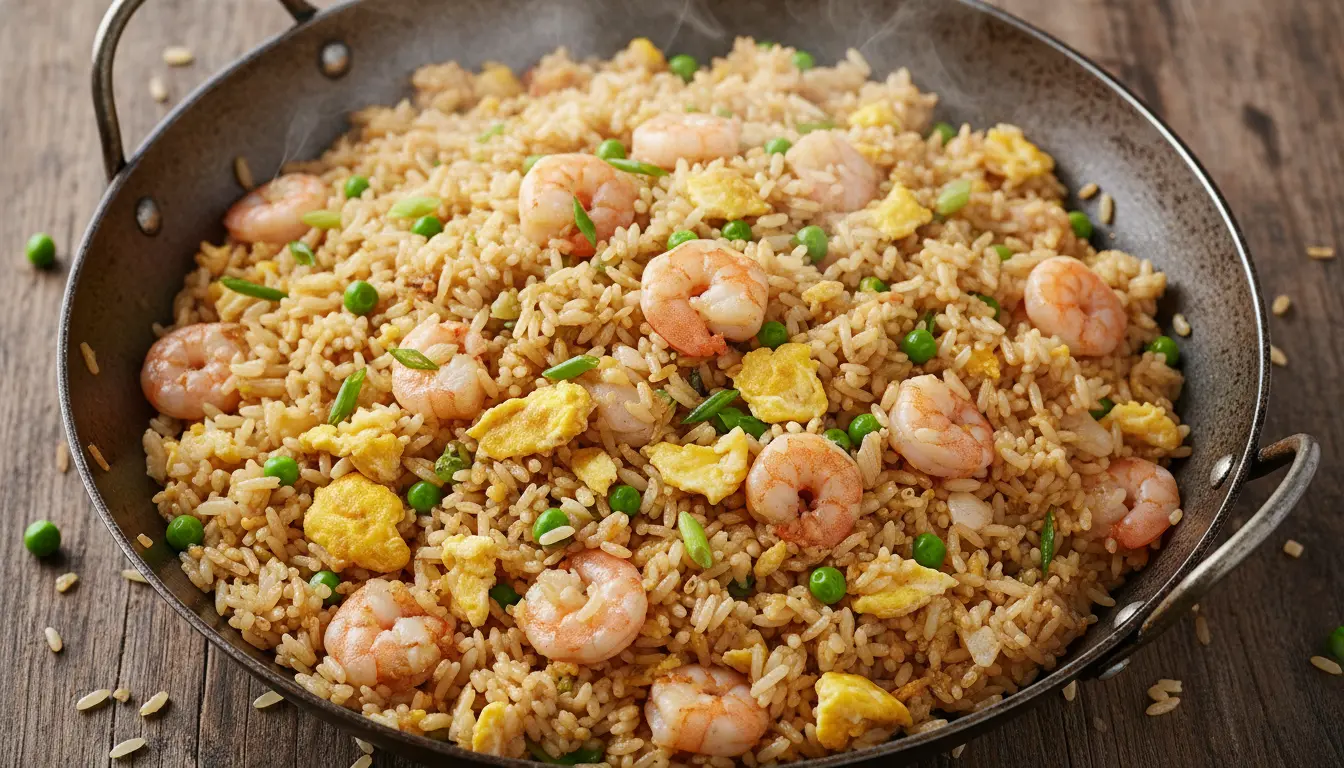
Yangzhou fried rice is the benchmark Chinese fried rice — light, separate grains studded with shrimp, char siu, egg and peas. The secret isn’t a long ingredient list; it’s day-old rice, a screaming-hot wok, and working fast so every grain fries rather than steams.
Why this recipe works
Cold day-old rice has dried out, so grains separate and fry instead of clumping.
Scramble the egg first, then add rice — coating grains in egg keeps them fluffy.
High heat, small batches deliver that smoky “wok hei”.
Key ingredients
Day-old cooked rice, shrimp, char siu (or ham), eggs, peas, carrot, scallions, soy sauce and white pepper. Full method in the recipe card.
Tips from our kitchen
Spread fresh rice on a tray and chill if you don’t have day-old rice.
Have everything prepped — fried rice cooks in minutes.
Season lightly with soy; Yangzhou rice should stay pale, not brown.
Add the cold rice, breaking up clumps, and toss over high heat.
Add peas and carrot; return the egg.
Season with soy sauce and white pepper, finish with scallions.
Notes
Cold day-old rice is essential for separate, fluffy grains.
Frequently asked questions
Why is my fried rice mushy?
Freshly cooked or warm rice steams instead of frying. Use cold, day-old rice and a very hot wok in small batches.
Can I make it without a wok?
Yes — use your largest, heaviest skillet, get it very hot, and cook in batches so you don’t crowd the pan.
Variations & substitutions
Yangzhou Fried Rice is wonderfully versatile, allowing for creative swaps while maintaining its core appeal. Here are some real, expert-approved substitutions to tailor it to your pantry or preference:
Proteins: Instead of char siu (Chinese BBQ pork), use 1 cup of diced cooked chicken breast or thigh, or 1 cup of diced ham. For the shrimp, bay scallops or calamari rings can be used, or simply increase the amount of char siu/chicken. For a vegetarian option, omit the meat and shrimp, and add 1 cup of firm tofu (pressed, diced, and pan-fried until golden brown) along with an extra egg.
Vegetables: While peas and carrots are classic, feel free to swap or add. Try 1/2 cup corn kernels, 1/2 cup finely diced green beans, or 1/4 cup rehydrated and sliced dried shiitake mushrooms for a deeper umami. A handful of chopped bok choy or baby spinach can be stirred in at the very end until just wilted for a fresh green element.
Aromatics: If you don’t have fresh ginger, a pinch (1/4 teaspoon) of ground ginger can be used in a pinch, though fresh is always superior. For a milder onion flavor, finely diced shallots can replace part of the scallions.
Flavor Boosters: For an extra layer of savory depth, add 1 teaspoon of oyster sauce (or vegetarian oyster sauce) along with the light soy sauce. A tiny dash (1/2 teaspoon) of dark soy sauce can be added for a richer color without significantly altering the flavor profile. For a subtle kick, a drizzle of chili oil or a pinch of white pepper can be added at the very end.
What to serve with it
Yangzhou Fried Rice is a deliciously complete meal in itself, offering a balanced blend of protein, carbohydrates, and vegetables. However, it pairs beautifully with lighter, complementary dishes that cleanse the palate, add a different texture, or enhance the overall Chinese dining experience. Think about contrasting flavors and textures to create a truly satisfying spread.
Hot and Sour Soup: Its tangy, spicy, and savory notes provide a wonderful contrast to the fried rice.
Egg Drop Soup: A light, comforting, and simple soup that balances the richness of the fried rice.
Steamed Garlic Gai Lan (Chinese Broccoli): Crisp-tender greens with a hint of garlic offer a refreshing, healthy counterpoint.
Crispy Spring Rolls or Egg Rolls: Add a delightful crunch and a different flavor profile.
Pan-Fried Potstickers (Guo Tie): Savory dumplings provide another textural and flavor dimension.
Lightly Steamed Fish with Ginger and Scallions: A delicate, clean-tasting protein option that won’t overpower the fried rice.
Cucumber Salad with Sesame Dressing: A cool, tangy, and refreshing side to cut through the richness.
Make ahead, storage & reheating
Efficiency is key for great fried rice, and much of the prep can be done in advance. Proper storage and reheating ensure your leftovers are just as delicious as the first serving.
Rice Preparation (Make Ahead): The most crucial step is using cold, day-old rice. Cook 2-3 cups of long-grain white rice (Jasmine is ideal) 1 day in advance. Once cooked, spread it thinly on a baking sheet to cool quickly, then refrigerate uncovered for at least 6-8 hours, or up to 2 days, to thoroughly dry out the grains. This prevents mushy fried rice.
Ingredient Prep (Make Ahead): Dice your char siu, peel and devein shrimp, and chop all vegetables (carrots, peas, scallions) up to 24 hours ahead. Store each ingredient separately in airtight containers in the refrigerator. Whisk eggs just before you’re ready to cook.
Storage (Cooked Fried Rice): Allow the fried rice to cool completely (within 1-2 hours) before transferring it to an airtight container. Store in the refrigerator for up to 3-4 days. For longer storage, freeze the cooled fried rice in a freezer-safe bag or container for up to 1 month. Label with the date.
Reheating (From Refrigerator):
Stovetop (Recommended): Heat 1-2 teaspoons of neutral, high-smoke-point oil (like canola or grapeseed) in a non-stick pan or wok over medium-high heat. Add the desired portion of fried rice, breaking up any clumps with your spatula. Stir-fry for 5-7 minutes, tossing frequently, until heated through and the grains are slightly crispy again. A splash of water (1 tablespoon per serving) can help reintroduce moisture if the rice seems too dry.
Microwave: Place a single serving in a microwave-safe bowl. Cover loosely with a damp paper towel to help retain moisture. Microwave on high for 1-2 minutes, stirring halfway, until piping hot. While convenient, this method may not achieve the same crispy texture as stovetop reheating.
Reheating (From Freezer): Thaw frozen fried rice overnight in the refrigerator. Once thawed, reheat using the stovetop or microwave methods described above. Stovetop reheating is highly recommended for best texture.
Common mistakes to avoid
Even experienced cooks can stumble with fried rice. Avoiding these common pitfalls will elevate your Yangzhou Fried Rice from good to outstanding.
Using Freshly Cooked, Warm Rice: This is the cardinal sin of fried rice. Warm, moist rice will steam and clump, resulting in a soggy, gummy texture instead of distinct, fluffy grains. Always use cold, day-old rice that has been thoroughly dried in the refrigerator.
Overcrowding the Wok (or Pan): Adding too many ingredients at once drastically lowers the temperature of your cooking surface. This causes ingredients to steam rather than fry, leading to a watery, bland, and soggy dish. Cook in batches if necessary, especially if you’re not using a large, high-powered wok.
Insufficient Heat: Fried rice demands high heat. Your wok or pan should be smoking hot before you add oil, and maintain that high temperature throughout the cooking process. Low heat will result in ingredients simmering in their own juices instead of developing that characteristic “wok hei” (breath of the wok) and crispy texture.
Adding Sauces Too Early: Soy sauce and other liquid seasonings can burn quickly at high temperatures and also introduce moisture that can make the rice soft. Add them towards the end of the cooking process, after the rice and other ingredients are properly fried and heated through.
Skipping Mise en Place: Fried rice cooks incredibly fast, often in just minutes. If your ingredients aren’t prepped, chopped, and measured out *before* you start cooking, you’ll be scrambling, leading to unevenly cooked or burnt components. Have everything ready and within arm’s reach.
More questions
Why is day-old rice essential for perfect fried rice?
Day-old, refrigerated rice loses a significant amount of its moisture content, making the individual grains firmer and less sticky. This dryness is absolutely crucial for achieving that desirable loose, distinct grain texture rather than a mushy, clumped mess when stir-fried at high heat. Freshly cooked rice still holds too much water, which will steam in the wok, preventing proper frying and absorption of flavors.
What’s the best oil to use for fried rice?
A neutral, high-smoke-point oil is best for fried rice. Canola, grapeseed, peanut, or sunflower oil are excellent choices. Their mild flavor won’t overpower the delicate balance of ingredients in Yangzhou Fried Rice, and their high smoke point allows you to achieve the necessary searing heat and “wok hei” without burning the oil and imparting off-flavors. Avoid olive oil or butter, as their low smoke points will cause them to burn quickly.
How do I get those distinct, non-clumpy grains of rice?
Beyond using dry, day-old rice, the key to distinct, non-clumpy grains lies in three techniques: high heat, proper stirring, and not overcrowding your wok. Ensure your wok or pan is screaming hot before adding oil. Add the rice in manageable portions, breaking up any clumps with the back of your spatula or wok ladle as soon as it hits the hot surface. Keep the rice moving constantly, tossing and stirring vigorously, to ensure even exposure to heat and allow moisture to evaporate quickly, preventing sticking and promoting individual grain separation. If your rice still clumps, try coating the cold rice lightly with a teaspoon of oil before adding it to the wok.
D L is a home cook with more than 20 years of experience in the kitchen. Two decades of cooking everyday meals for family — from quick weeknight dinners to the slow, comforting dishes of Asian home cooking — shaped a simple belief: good food should be reliable and approachable. At AIO Kitchen, D L tests every recipe in a real home kitchen and writes honest ingredient guides and kitchen-gear reviews to help home cooks get dependable results, every time.