
Watch how to make it
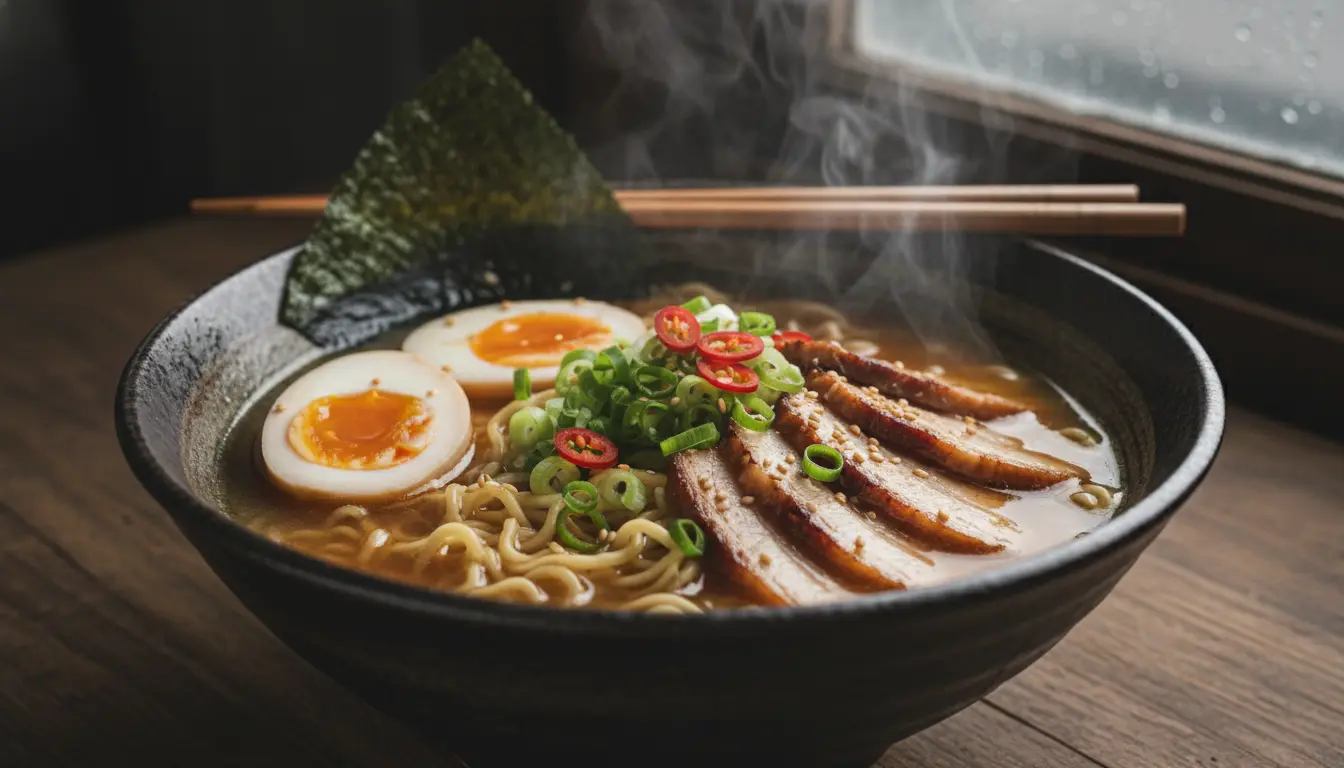
A great bowl of shoyu ramen is all about layers: a savory soy-based tare, a clear-but-rich broth, springy noodles, and toppings like soft-boiled egg, chashu pork and nori. You don’t need a 12-hour broth to eat well at home — this approachable version comes together in an evening.
Why this recipe works
- Tare + broth, kept separate until serving — the classic ramen structure that lets you control seasoning.
- A quick chicken-and-kombu broth delivers depth without all-day simmering.
- Jammy marinated egg (ajitama) made ahead takes the bowl from good to great.
Key ingredients
Fresh ramen noodles, soy sauce, mirin, kombu, chicken, eggs, chashu pork, scallions and nori. See the recipe card for the full method.
Tips from our kitchen
- Marinate the eggs the night before for the best jammy yolk and flavour.
- Cook noodles separately and add to the bowl last so they don’t go soft.
- Warm the bowls — ramen cools fast.
Japanese Shoyu Ramen
Ingredients
Method
- Make the tare: warm soy sauce and mirin together; divide between two bowls.
- Simmer chicken and kombu in water 30 minutes for a quick broth; strain.
- Soft-boil eggs 6.5 minutes, peel, and marinate in a little soy + mirin.
- Cook the noodles separately per package; drain well.
- Add noodles to the tare, pour over hot broth, and top with egg, chashu, scallions and nori.
Notes
Frequently asked questions
What’s tare?
Tare is the concentrated seasoning base (here soy + mirin) that sits in the bottom of the bowl; the broth is poured over it. It’s what makes a bowl “shoyu” ramen.
Can I use instant noodles?
Fresh ramen noodles are best, but good dried ramen works. Skip the seasoning packet and use your own tare and broth.
Variations & substitutions
While this recipe provides a fantastic baseline for a classic Shoyu Ramen, the beauty of home cooking lies in its adaptability. Don’t be afraid to experiment once you’ve mastered the fundamentals. Here are some expert-approved swaps and variations:
- Noodle Nuances: Can’t find fresh ramen noodles? High-quality dried ramen noodles (often labeled ‘chuka soba’) are a good substitute; just be sure to follow package directions for cooking time precisely. For a different texture, try thicker, chewier udon noodles (though this moves away from traditional shoyu ramen style) or even thin spaghetti in a pinch, boiled with a pinch of baking soda for alkalinity.
- Broth Boosters: For a richer, deeper umami, consider adding a small piece of kombu (dried kelp) and a handful of katsuobushi (bonito flakes) to your broth base while simmering, then strain. A tablespoon of red or white miso paste dissolved in a little hot broth before adding to your bowl can also add a delightful layer of complexity, transforming it into a shoyu-miso hybrid.
- Protein Play: Instead of chashu, try thinly sliced pan-seared chicken breast or thigh, marinated in a similar soy-ginger mixture. For a vegetarian option, pan-fried or baked marinated tofu or tempeh slices work beautifully, absorbing the broth’s flavor.
- Vegetable Ventures: Swap out spinach for blanched bok choy, bean sprouts, or thinly sliced napa cabbage. A handful of sweet corn kernels (fresh or frozen) adds a burst of color and sweetness, while a sprinkle of finely chopped scallions or a drizzle of chili oil can replace the green onions for a different aromatic kick.
- Tare Twists: Experiment with different types of shoyu (soy sauce). A blend of light and dark soy sauce can offer a more nuanced flavor profile. For an extra layer of sweetness and depth, a touch of oyster sauce or a dash of black vinegar can be interesting additions to your tare, though use sparingly to maintain balance.
What to serve with it
Ramen is often a meal in itself, but in Japan, it’s common to enjoy it with a few complementary side dishes that balance the rich broth and hearty noodles. Think of lighter, often fried, or pickled accompaniments that offer textural contrast or a refreshing palate cleanse. Here are some authentic pairings that elevate the ramen experience:
- Gyoza (Pan-fried Dumplings): The crispy bottoms and savory pork and vegetable filling of gyoza make them a classic ramen companion. Their umami complements the broth without overpowering it.
- Karaage (Japanese Fried Chicken): Juicy, marinated, and perfectly crispy fried chicken offers a delightful textural contrast and a burst of savory flavor. A squeeze of lemon brightens the richness.
- Edamame: Simple, steamed edamame pods, lightly salted, provide a fresh, slightly sweet, and healthy counterpoint to the rich ramen. They’re also great for a light appetizer.
- Takuan (Pickled Daikon Radish): The crisp texture and tangy, slightly sweet flavor of takuan offer a refreshing palate cleanser between spoonfuls of ramen, cutting through the richness.
- Chahan (Japanese Fried Rice): For a truly hearty meal, a small bowl of Japanese-style fried rice, often made with leftover chashu or simple vegetables, is a popular pairing.
Make ahead, storage & reheating
The key to excellent homemade ramen is assembling it fresh, but many components can be prepared in advance to make weeknight ramen dreams a reality. Proper storage and reheating ensure quality and safety.
- Broth: The broth is your best friend for make-ahead. Prepare it fully, cool completely, then store in an airtight container in the refrigerator for up to 3-4 days. For longer storage, freeze in individual portions for up to 3 months. Reheat gently over medium heat, stirring occasionally, until simmering. Do not boil vigorously, which can make it cloudy.
- Tare (Seasoning Concentrate): Your tare is quite stable. Store it in a sealed jar or container in the refrigerator for several weeks to even months, depending on ingredients. As it’s a concentrate, it’s less prone to spoilage.
- Chashu (Pork Belly): Once cooked and cooled, store the entire roll or sliced portions in its braising liquid in an airtight container in the refrigerator for up to 4 days. For longer storage, freeze individual slices or the whole roll (without liquid, or with just enough to coat) for up to 1 month. Reheat sliced chashu gently in a pan with a splash of its braising liquid, or dip briefly into the hot ramen broth just before serving.
- Aroma Oil: Store your finished aroma oil in a clean, airtight bottle or jar at room temperature for up to 2 weeks, or in the refrigerator for longer (it might solidify but will liquefy when warmed).
- Ajitama (Marinated Eggs): Store peeled, marinated eggs in their liquid in an airtight container in the refrigerator for up to 3 days. They are best served chilled or at room temperature.
- Noodles & Vegetables: These are best prepared fresh just before serving. Pre-cooked noodles can become gummy. If absolutely necessary, cook noodles al dente, rinse immediately with cold water, toss with a tiny bit of neutral oil, and store in the fridge for no more than 1 day. Reheat by dipping into boiling water for 15-30 seconds. Most vegetables (spinach, scallions) should be prepped but added fresh.
Common mistakes to avoid
Even seasoned cooks can stumble when making ramen. Avoiding these common pitfalls will significantly improve your homemade bowl:
- Overcooking the Noodles: This is perhaps the most common ramen sin. Mushy, soggy noodles ruin the entire experience. Ramen noodles cook very quickly, often in 60-90 seconds. Always cook them fresh, just before serving, and follow package directions precisely. A slight al dente bite is ideal.
- Not Seasoning the Broth Properly (or at all): Simply making a stock isn’t enough. The tare is crucial. Without it, your broth will taste bland, no matter how rich your stock is. Add your tare to the bowl first, then the hot broth, allowing them to emulsify. Taste and adjust.
- Using Cold Toppings: Adding cold chashu, eggs, or vegetables directly to your hot broth will significantly drop its temperature, resulting in a lukewarm bowl. Gently warm your chashu, and ensure other toppings are at least room temperature.
- Assembling Too Early: Ramen is a dish meant to be eaten immediately upon assembly. If you let it sit, the noodles will absorb too much broth and become soggy, and the broth will cool down. Have all components ready, assemble quickly, and serve without delay.
- Boiling the Broth Vigorously: While simmering is necessary, a rolling boil can emulsify fats in a way that makes your broth cloudy and can reduce it too quickly, altering its intended balance. Maintain a gentle simmer for clarity and flavor retention.
More questions
Can I use store-bought broth or stock?
Absolutely, especially for convenience! To elevate store-bought chicken or vegetable broth, simmer it with a piece of kombu (dried kelp) and a handful of katsuobushi (bonito flakes) for 15-20 minutes, then strain. This adds a crucial layer of umami. Alternatively, simply ensure your tare is robust and flavorful, as it will provide the primary seasoning for the broth.
What’s the secret to perfectly jammy ramen eggs (Ajitama)?
The key is precise timing and an immediate ice bath. Bring water to a rolling boil. Gently lower cold eggs into the boiling water. For a perfect jammy yolk, boil for exactly 6 minutes and 30 seconds for medium eggs, or 7 minutes for large eggs. Immediately transfer them to an ice bath to stop the cooking process. Peel carefully under cold running water, then marinate in your chashu braising liquid or a separate soy-mirin mixture for at least 6-12 hours.
What’s the single most important element for truly great homemade ramen?
While all components are important, the most critical element for a truly great bowl of ramen is the balance and synergy of the tare, aroma oil, and broth, combined with perfectly cooked, fresh noodles. Many focus solely on the broth, but without a well-balanced tare and a fragrant aroma oil, even the best broth will fall flat. The interplay of these three elements creates the depth and complexity ramen is famous for.
