
Watch how to make it
Bibimbap — literally “mixed rice” — is Korea’s perfect bowl: warm rice topped with seasoned vegetables (namul), a protein, a fried egg, and a generous spoon of gochujang sauce, all stirred together at the table. It’s endlessly flexible, meal-prep friendly, and a brilliant way to use up vegetables.
We make this most weeks — the components keep for days, so a bowl comes together in minutes.
Why this recipe works
- Each vegetable is seasoned separately (namul) so every bite has its own character.
- A crispy rice bottom — if you use a hot stone or cast-iron bowl (dolsot) — adds texture.
- The gochujang sauce ties everything together with sweet heat.
Key ingredients
Short-grain rice, spinach, carrots, bean sprouts, shiitake mushrooms, beef bulgogi (optional), eggs, and gochujang for the sauce. Sesame oil and toasted sesame seeds season the namul.
Tips from our kitchen
- Blanch and season vegetables ahead; store separately and assemble to order.
- For dolsot-style crispy rice, press rice into a hot oiled cast-iron bowl for 2-3 minutes.
- Don’t skip the runny-yolk egg — it enriches the whole bowl when mixed in.
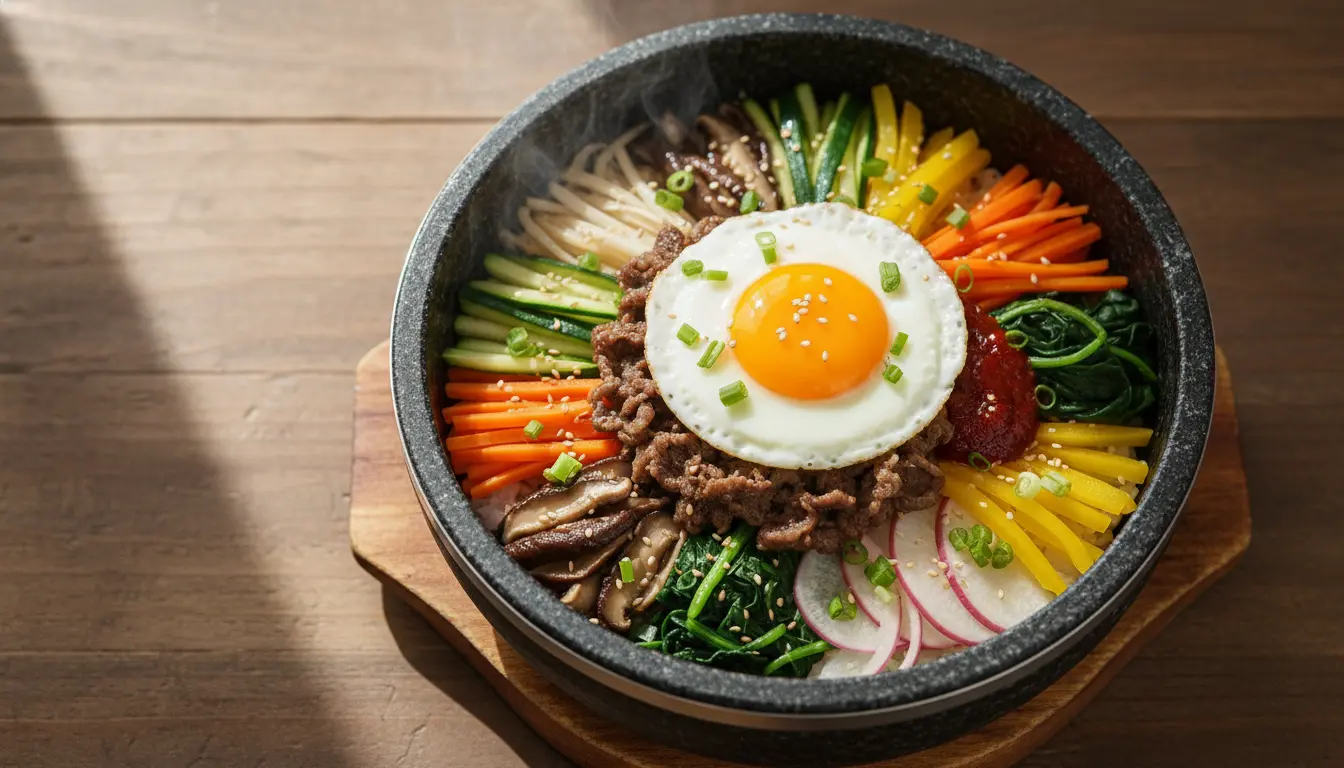
Korean Bibimbap
Ingredients
Method
- Blanch and season spinach, bean sprouts and carrot separately with sesame oil and salt (namul).
- Saute mushrooms and beef until cooked.
- Mix gochujang with a little sesame oil and water for the sauce.
- Divide rice into bowls; arrange vegetables, beef and namul on top.
- Fry the eggs sunny-side up and place on each bowl.
- Add gochujang sauce and sesame seeds; mix well before eating.
Notes
Frequently asked questions
Is bibimbap healthy?
Yes — it’s largely vegetables and rice with a modest amount of protein. Control the gochujang sauce and oil to manage calories.
Can I make it vegetarian?
Absolutely. Skip the beef and add extra mushrooms or seasoned tofu. Check that your gochujang has no fish-derived ingredients if you’re strict.
What rice is best?
Short-grain (sushi-style) rice is traditional because its slight stickiness holds together when mixed.
Variations & substitutions
- Protein Power-Ups: While thinly sliced beef (bulgogi-style) is classic, feel free to swap it. Try pan-fried tofu or tempeh for a vegetarian twist, sautéed shrimp for a lighter option, or even ground pork or chicken seasoned with soy sauce, garlic, and sesame oil.
- Veggie Adventures: Don’t limit yourself to the usual suspects. Experiment with different mushrooms like shiitake or oyster, add julienned zucchini or bell peppers, or swap out spinach for blanched kale or bok choy. The key is to prepare each vegetable separately with its own subtle seasoning.
- Grain Gains: For a nuttier flavor and added fiber, use a mix of white and brown rice, or go entirely with short-grain brown rice. Quinoa can also be a surprisingly delicious and healthy base.
- Sauce Swaps: While gochujang is iconic, you can customize the sauce. For less heat, mix gochujang with a bit more honey or a dollop of doenjang (Korean fermented soybean paste) for a deeper, earthier flavor. A drizzle of perilla oil instead of sesame oil offers a unique, herbaceous aroma.
- Egg-cellent Alternatives: A perfectly fried egg with a runny yolk is non-negotiable for many, but a poached egg offers a similar creamy richness without the oil. For a different texture, a simple scrambled egg or even a thin egg crepe (jidan) cut into strips can work.
What to serve with it
Bibimbap is often considered a complete meal in itself, a symphony of flavors and textures in one bowl. However, in Korean dining, a spread of banchan (small side dishes) always accompanies the main event, enhancing the experience and offering refreshing counterpoints. A simple, clear broth soup is also a common and welcome addition, especially on a cooler day, to cleanse the palate between bites.- Kimchi: The quintessential Korean side dish. Napa cabbage kimchi (baechu kimchi) or cubed radish kimchi (kkakdugi) provides a spicy, sour, and fermented kick that beautifully cuts through the richness of the bibimbap.
- Miyeokguk (Seaweed Soup): A light, savory clear broth made with rehydrated seaweed, often seasoned simply with soy sauce and garlic. It’s nourishing and refreshing.
- Oi Muchim (Spicy Cucumber Salad): Crisp cucumber slices tossed in a gochugaru (Korean chili powder) dressing with garlic, vinegar, and sesame oil. Adds a fresh, tangy crunch.
- Gyeran Jjim (Steamed Egg Custard): A fluffy, savory steamed egg dish, often served in a hot stone bowl. It’s comforting and mild, offering a lovely contrast to the bibimbap’s bold flavors.
- Danmuji (Pickled Yellow Radish): Thinly sliced, bright yellow pickled radish offers a sweet, tangy, and crunchy bite that’s incredibly refreshing.
Make ahead, storage & reheating
Bibimbap is best enjoyed freshly assembled, but many of its components can be prepared in advance to streamline meal prep. This makes it a fantastic option for busy weeknights.- Individual Components (Make Ahead):
- Cooked Rice: Store cooled, cooked short-grain rice in an airtight container in the refrigerator for up to 3-4 days.
- Sautéed Vegetables: Each seasoned vegetable (spinach, carrots, mushrooms, etc.) can be stored separately in airtight containers in the fridge for up to 3-4 days. This prevents flavors from melding prematurely and maintains individual textures.
- Cooked Meat: Marinated and cooked beef or other proteins can be refrigerated in an airtight container for 3-4 days.
- Gochujang Sauce: The mixed gochujang sauce can be made well in advance and stored in a sealed jar in the refrigerator for several weeks.
- Assembled Bibimbap (Storage): While not ideal due to potential sogginess of some ingredients and texture changes in the egg, a fully assembled bowl of bibimbap can be stored in an airtight container in the refrigerator for up to 1-2 days.
- Freezing: Freezing assembled bibimbap is generally not recommended as the vegetables can become mushy and the egg texture degrades significantly upon thawing. Cooked white rice can be frozen for up to 1 month, and cooked beef can be frozen for 2-3 months, but always freeze them separately.
- Reheating:
- Individual Components: Reheat vegetables and meat gently in a non-stick pan over medium heat until warmed through, or microwave in short 30-second bursts. Reheat rice in the microwave with a splash of water, covered, or in a steamer.
- Assembled Bowl: For a pre-assembled bowl, microwave on medium power for 1-2 minutes, stirring halfway through, until heated through. If you desire a crispy rice bottom (dolsot-style), transfer the cold bibimbap to a hot, lightly oiled cast iron skillet or dolsot, press down firmly, and cook over medium-high heat for 5-10 minutes until a crust forms on the bottom. Add a freshly fried egg for best results.
Common mistakes to avoid
- Overcooking the Vegetables: Each vegetable should be tender-crisp, retaining its vibrant color and a slight bite. Wilting them into a mushy mess diminishes their individual texture and flavor contribution. Sauté quickly over high heat or blanch briefly.
- Not Seasoning Each Component Individually: This is crucial! Bibimbap isn’t just a mix of unseasoned ingredients. Each vegetable, the meat, and even the rice should be seasoned lightly on its own (typically with soy sauce, garlic, sesame oil, and salt) before assembly. This builds layers of flavor that make the final mixed bowl truly dynamic.
- Using Cold Rice: Warm, freshly cooked (or properly reheated) rice is essential. Cold rice will result in a clumpy, stiff bibimbap that doesn’t absorb the sauce and egg yolk as effectively, leading to a less cohesive and enjoyable texture.
- Too Much Gochujang Sauce from the Start: Gochujang can be quite potent. While delicious, adding too much initially can overpower the delicate flavors of the other ingredients. Start with a conservative amount (1-2 tablespoons per serving) and add more to taste after mixing.
- Skipping the Fried Egg (or cooking it fully): The runny yolk of a perfectly fried egg (sunny-side up) is a binding agent and a rich, creamy sauce in itself. It emulsifies with the gochujang and other ingredients, creating that signature luscious texture. A fully cooked, firm yolk won’t provide the same magic.
