
Watch how to make it
Kung Pao chicken (gong bao ji ding) is a Sichuan classic built on the signature “ma la” tingle of Sichuan peppercorns and dried chilies, balanced by a sweet-sour-savory sauce and crunchy peanuts. Restaurant versions are often dumbed down — this one keeps the numbing heat that makes it special.
We dialed the chili-to-peppercorn ratio for real ma la character without being painful.
Why this recipe works
- Velveting the chicken (a cornstarch-and-soy marinade) keeps it silky and tender.
- Toasting whole dried chilies and Sichuan peppercorns in oil builds the aromatic base.
- A pre-mixed sauce means everything comes together fast over high heat.
Key ingredients
Diced chicken, dried red chilies, Sichuan peppercorns, soy sauce, Chinese black vinegar, sugar, garlic, ginger, scallions and roasted peanuts. A good wok makes the high-heat stir-fry far easier.
Tips from our kitchen
- Don’t burn the peppercorns — toast just until fragrant or they turn bitter.
- Have the sauce mixed and aromatics chopped before heating the wok.
- Add peanuts at the very end so they stay crunchy.
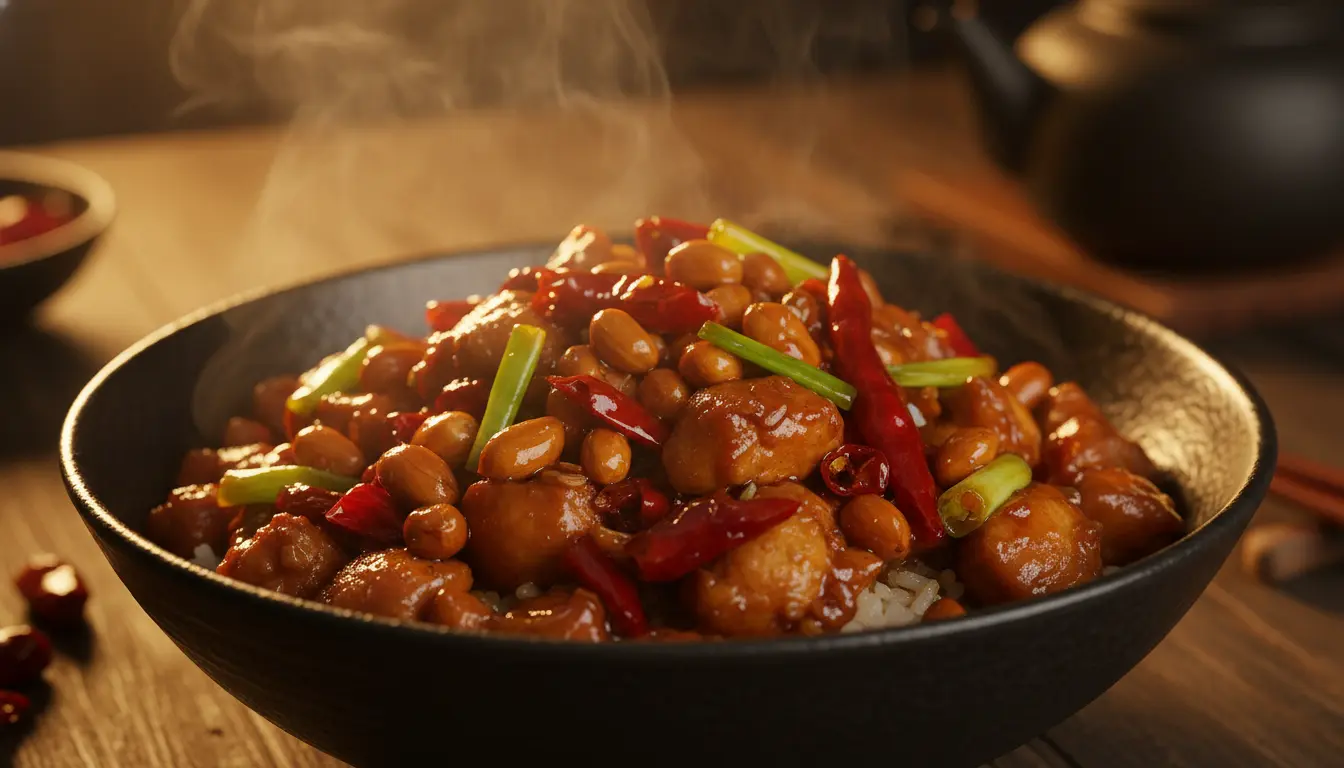
Sichuan Kung Pao Chicken
Ingredients
Method
- Marinate (velvet) diced chicken in cornstarch and 1 tbsp soy sauce, 15 min.
- Mix remaining soy, vinegar and sugar into a sauce.
- Toast dried chilies and Sichuan peppercorns in hot oil until fragrant.
- Add chicken and stir-fry until just cooked.
- Add garlic, scallions and the sauce; toss to coat.
- Stir in peanuts off the heat and serve.
Notes
Frequently asked questions
What are Sichuan peppercorns?
Not actually pepper — they’re dried husks that create a citrusy, numbing tingle (ma) on the tongue. They’re essential to authentic Kung Pao.
How spicy is it?
You control it. The dried chilies are mostly for aroma; remove the seeds or use fewer for a milder dish.
Can I use chicken breast?
Yes, but velvet it well. Thigh is more forgiving and stays juicier under high-heat stir-frying.
Variations & substitutions
While the classic Sichuan Kung Pao Chicken is a masterpiece on its own, its robust flavor profile makes it surprisingly adaptable. Here are some expert-approved ways to tweak the recipe without sacrificing its soul:
- Protein Swaps: For a vegetarian twist, substitute 1 lb extra-firm tofu, pressed and cut into 1-inch cubes, then lightly fried until golden before adding to the wok. Shrimp (1 lb, peeled and deveined) can replace chicken; marinate for just 15 minutes and cook quickly (1-2 minutes per side) to prevent toughness. Thinly sliced pork tenderloin (1 lb) also works beautifully, benefiting from the same velveting technique as chicken.
- Vegetable Additions: While not traditional, you can introduce a pop of color and texture with 1 cup of diced red bell pepper or 1/2 cup of sliced bamboo shoots, added during the last minute of stir-frying to maintain a slight crunch.
- Nut Alternatives: If peanuts aren’t your preference or you have an allergy, roasted cashews make an excellent substitute, offering a similar crunch and richness. Add them at the very end, just before serving.
- Spice Level Adjustments: To dial down the heat, reduce the number of dried chilies or remove their seeds entirely before adding. For an extra kick, a drizzle of homemade chili oil (Lao Gan Ma is a great store-bought option) can be added just before serving.
- Sichuan Peppercorn Intensity: If you find the “ma la” (numbing) sensation too intense, reduce the quantity of Sichuan peppercorns to 1/2 teaspoon. If you’re struggling to find them, a tiny pinch of freshly ground black pepper combined with a whisper of lemon zest can offer a faint echo of the unique zing, though it won’t replicate the true numbing quality.
What to serve with it
Kung Pao Chicken is a symphony of spicy, savory, tangy, and subtly sweet flavors, with that signature numbing sensation. To truly appreciate its complexity, it’s best paired with dishes that complement its richness and provide a cooling contrast. Think simple, clean flavors that allow the Kung Pao to shine as the star of your meal.
- Steamed Jasmine Rice: An absolute essential. Its neutral flavor and fluffy texture are perfect for soaking up the delicious sauce and balancing the heat.
- Garlic Stir-fried Gai Lan (Chinese Broccoli): Lightly blanched and quickly stir-fried with garlic, this vibrant green offers a fresh, slightly bitter counterpoint that cleanses the palate.
- Smashed Cucumber Salad (Pai Huang Gua): A classic Sichuan appetizer. Crisp cucumbers smashed and dressed with garlic, vinegar, and a touch of chili oil provide a refreshing, tangy, and cooling contrast to the richness of the chicken.
- Simple Egg Drop Soup: A light, comforting soup that offers a gentle, savory warmth without competing with the main dish’s bold flavors.
- Blanched Asparagus or Bok Choy: Lightly cooked and seasoned with a pinch of salt, these vegetables offer a crisp, fresh element that balances the meal.
Make ahead, storage & reheating
Savvy meal prep can make weeknight Kung Pao a breeze, and knowing how to store and reheat ensures every bite is as good as the first.
- Make Ahead: The sauce can be mixed and stored in an airtight container in the refrigerator for up to 3 days. The chicken can be velveted and marinated up to 4 hours in advance, kept covered in the fridge. Vegetables can be chopped and prepped a day ahead. This streamlines the stir-frying process to just minutes.
- Storage: Once cooked, allow the Kung Pao Chicken to cool completely before transferring it to an airtight container. It will keep beautifully in the refrigerator for 3-4 days. While technically freezable, the texture of the chicken (which can become a bit rubbery) and peanuts (which can lose their crispness) isn’t ideal after thawing. If you must freeze, it’s best for up to 1 month in an airtight, freezer-safe container, but expect a slight compromise in quality.
- Reheating: For best results, reheat on the stovetop. Transfer the leftovers to a wok or large skillet over medium heat. Add a splash (1-2 tablespoons) of water or chicken broth to help loosen the sauce and prevent drying. Stir-fry gently until heated through, about 5-7 minutes. Avoid high heat, which can overcook the chicken. Reheating in the microwave is also an option: cover the dish and heat on medium power, stirring every minute, until hot.
Common mistakes to avoid
Even seasoned cooks can stumble when making a dish as nuanced as Kung Pao Chicken. Steer clear of these common pitfalls to ensure your dish is authentic and delicious every time:
- Overcooking the Chicken: The velveting technique is designed to keep the chicken incredibly tender. Over-stir-frying, especially after adding the sauce, will reverse this effect, resulting in dry, rubbery chicken. Cook just until opaque and the sauce has thickened.
- Insufficiently Toasting Aromatics and Chilies: Don’t rush this step! The dried chilies and Sichuan peppercorns need a minute or two in hot oil to bloom and release their fragrant, spicy, and numbing oils. If they don’t darken slightly and become aromatic, your dish will lack depth.
- Using Unroasted Peanuts: Raw peanuts will be soft and absorb too much moisture, becoming soggy. Always use pre-roasted, unsalted peanuts, or blanch and fry raw peanuts yourself until golden and crisp. Add them at the very end to maintain their crunch.
- Skimping on Sichuan Peppercorns: This is the soul of authentic Kung Pao. Without enough freshly ground Sichuan peppercorns, you miss the signature “ma la” (numbing and spicy) sensation that defines the dish. Don’t confuse them with black peppercorns; their flavor is unique.
- Crowding the Wok: A common stir-fry error. Adding too much chicken or too many vegetables at once lowers the wok’s temperature, leading to steaming instead of searing. This results in bland, watery ingredients rather than beautifully caramelized ones. Cook in batches if your wok isn’t large enough.
More questions
Can I make Sichuan Kung Pao Chicken less spicy?
Absolutely! The spice level is quite adjustable. To reduce the heat, simply use fewer dried chilies. For a very mild version, you can even remove the seeds from the chilies before adding them, as much of the capsaicin (the heat compound) resides there. You can also omit the chilies entirely and still enjoy the complex flavors, especially the unique numbing sensation from the Sichuan peppercorns.
What’s the main difference between authentic Sichuan Kung Pao and Americanized versions?
The differences are significant! Authentic Sichuan Kung Pao emphasizes the “ma la” (numbing and spicy) sensation from a generous amount of Sichuan peppercorns and dried chilies, balanced by savory, tangy, and subtly sweet notes. It typically features chicken, peanuts, and green onions, with minimal other vegetables. Americanized versions often dial down the spice and the numbing quality, significantly increase the sweetness, and frequently include a wider array of vegetables like bell peppers, zucchini, and carrots. Cashews are also a common substitution for peanuts in Americanized versions.
How do I ensure my peanuts stay crispy in the dish?
The trick to crispy peanuts is twofold: first, start with good quality, roasted, unsalted peanuts (or blanch and fry raw peanuts yourself until golden brown and drain well). Second, and crucially, add them to the wok right at the very end of the cooking process, just before serving. This minimizes their exposure to the sauce and heat, preserving their delightful crunch. If you add them too early, they’ll absorb moisture and become soft.
