
Watch how to make it
Thai green curry (gaeng keow wan) is fragrant, creamy and quietly fiery — a coconut-rich curry built on a fresh green paste of chilies, lemongrass, galangal and kaffir lime. Made well, it’s bright and aromatic, not heavy. This is our weeknight version that still tastes like a Bangkok kitchen.
Why this recipe works
- Fry the paste first in thick coconut cream until the oil splits — this blooms the aromatics.
- Two-stage coconut (cream then milk) gives richness without greasiness.
- Finish with Thai basil and lime off the heat to keep it fresh.
Key ingredients
Green curry paste, coconut milk, chicken (or tofu), Thai eggplant, bamboo shoots, fish sauce, palm sugar, kaffir lime leaves and Thai basil. Full amounts in the recipe card below.
Tips from our kitchen
- Use full-fat coconut milk — light versions won’t split or carry the flavour.
- Balance at the end: fish sauce for salt, palm sugar for sweetness, lime for lift.
- Make your own paste if you can; it’s noticeably brighter than jarred.
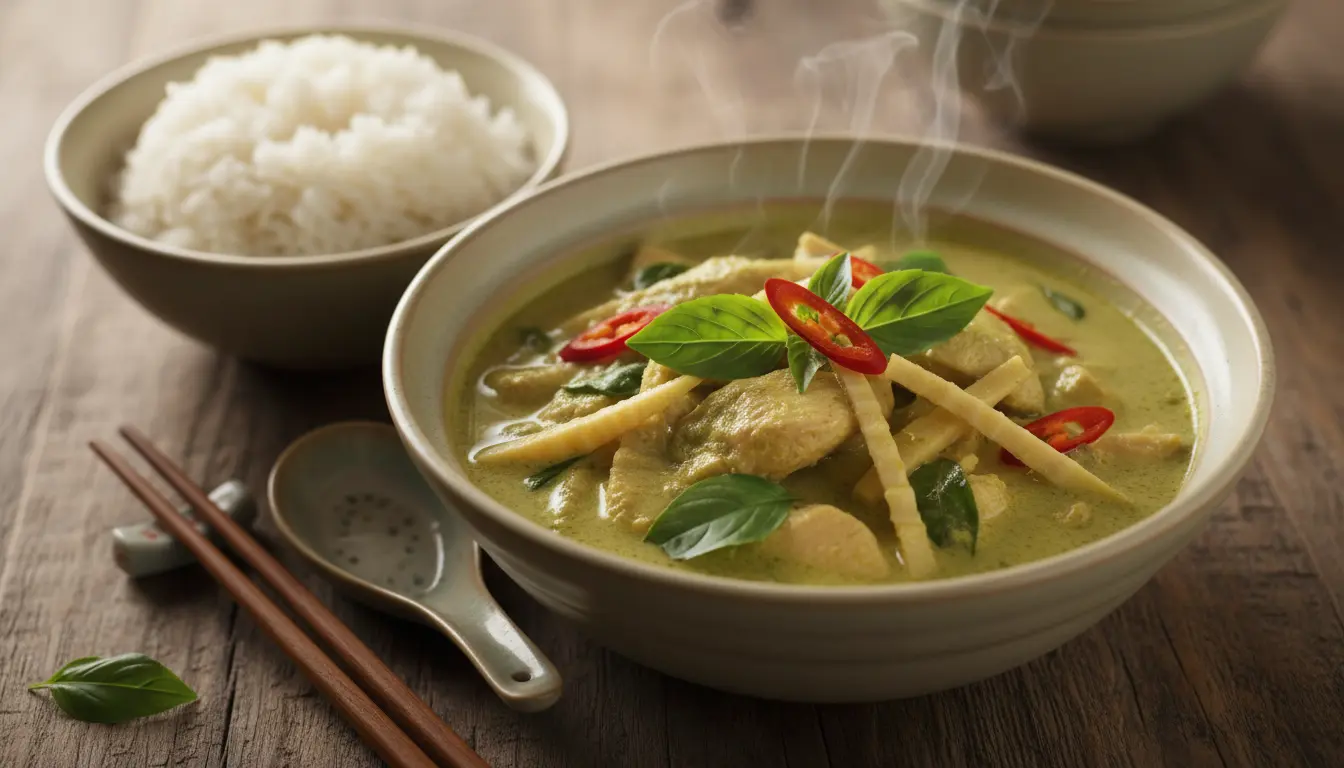
Thai Green Curry
Ingredients
Method
- Fry the curry paste in 4 tbsp thick coconut cream until the oil splits and it smells fragrant.
- Add chicken and stir to coat.
- Pour in the rest of the coconut milk, add eggplant and bamboo shoots; simmer until cooked.
- Season with fish sauce and palm sugar; add kaffir lime leaves.
- Off the heat, stir in Thai basil. Serve with jasmine rice.
Notes
Frequently asked questions
Why did my curry turn out greasy?
Usually too much oil or over-reducing. Fry the paste until just split, then add liquid and don’t boil hard.
Can I make it vegetarian?
Yes — use tofu and vegetables, and swap fish sauce for light soy or a vegan fish sauce.
Variations & substitutions
- Protein Swaps: While chicken is classic, don’t hesitate to experiment. For a richer flavor, try thinly sliced beef sirloin or flank steak. Shrimp cooks quickly and adds a delicate sweetness. Firm tofu (pressed and pan-fried until golden) or tempeh are excellent plant-based alternatives.
- Vegetable Diversity: Expand beyond the standard bamboo shoots and Thai eggplant. Add bell peppers (red, yellow, or orange for color contrast), snow peas, broccoli florets, green beans, or even sliced mushrooms. Ensure vegetables are cut into bite-sized pieces and added at appropriate times to avoid overcooking.
- Spice Level Adjustment: For more heat, add a few extra fresh bird’s eye chilies (green or red) directly to the curry while simmering, or slice them thinly and offer them as a garnish for those who dare. To reduce heat, use less curry paste or add an extra splash of coconut milk.
- Homemade vs. Store-Bought Paste: If you’re feeling ambitious, making your own green curry paste from scratch offers unparalleled freshness and control over ingredients. If using store-bought, opt for high-quality brands like Mae Ploy or Maesri, but be aware they can be quite salty and spicy, so adjust fish sauce and sugar accordingly.
- Coconut Milk Choices: Full-fat coconut milk (specifically the thick cream from the top of the can) is crucial for the authentic richness and ‘oil separation’ stage. For a lighter version, you can use light coconut milk, but be prepared for a thinner consistency and less luxurious mouthfeel.
- Sweetener Alternatives: While palm sugar offers a unique, caramel-like depth, dark brown sugar can be used as a readily available substitute. Start with a smaller amount and add more to taste.
- Vegetarian/Vegan Adaptations: For a completely plant-based curry, ensure your green curry paste is vegan (many traditional brands contain shrimp paste). Substitute fish sauce with a high-quality vegetarian mushroom or soy-based sauce, adding a pinch of salt to balance.
What to serve with it
Thai Green Curry is a robust, flavorful dish designed to be the star of your meal. The key to a balanced plate is pairing it with simple, neutral accompaniments that allow its complex flavors to shine through and help temper its heat. Plain, fluffy rice is non-negotiable, acting as a perfect sponge for the rich, aromatic sauce.
- Steamed Jasmine Rice: This is the quintessential pairing. Its fragrant aroma and soft, slightly sticky texture are ideal for soaking up every drop of the curry sauce.
- Brown Rice: For a healthier, nuttier alternative, brown rice also works beautifully, offering a pleasant textural contrast.
- Roti or Paratha: Flatbreads are excellent for scooping up the sauce, adding another dimension to the meal. Warm them lightly before serving.
- Thai-Style Fried Egg (Kai Jeow): A simple, crispy-edged omelet often served alongside curries in Thailand, providing a comforting, protein-rich addition.
- Simple Cucumber Salad (Ajard): A refreshing side of thinly sliced cucumbers, shallots, and chilies in a sweet and sour dressing helps to cut through the richness and heat of the curry.
Make ahead, storage & reheating
Thai Green Curry is one of those magical dishes that often tastes even better the next day, as the flavors have more time to meld and deepen. This makes it an excellent candidate for meal prep.
- Make Ahead: You can prepare the entire curry up to 1-2 days in advance. Store it in an airtight container in the refrigerator. The flavors will deepen beautifully. If you’re worried about certain vegetables (like bell peppers or snow peas) becoming too soft, you can add them during the reheating process.
- Storage:
- Refrigerator: Store leftover Thai Green Curry in a sealed, airtight container in the refrigerator for up to 3-4 days.
- Freezer: For longer storage, transfer the cooled curry to freezer-safe containers or heavy-duty freezer bags. It can be frozen for up to 2-3 months. Note that the texture of some vegetables (like eggplant) might become slightly softer upon thawing, and the coconut milk may separate. This is normal and can often be remedied during reheating.
- Reheating:
- Stovetop (Recommended): For best results, reheat the curry gently on the stovetop over medium-low heat. Stir frequently to ensure even heating and to help re-emulsify any separated coconut milk. If the curry seems too thick, add a splash of water or fresh coconut milk to achieve your desired consistency. Bring to a gentle simmer and heat until warmed through, about 5-10 minutes.
- Microwave: Reheat individual portions in a microwave-safe bowl, covered, on medium power in 1-2 minute intervals, stirring well between each to ensure even heating and prevent splattering.
Common mistakes to avoid
- Not Frying the Paste Properly: This is perhaps the most crucial step. Rushing or skipping the process of frying the green curry paste in coconut cream until fragrant and the oil separates will result in a raw, underdeveloped flavor profile. Take your time here – it builds the foundation of the curry’s taste.
- Boiling the Coconut Milk Vigorously: Coconut milk, especially full-fat, can split or become oily if boiled too aggressively. Maintain a gentle simmer throughout the cooking process once the coconut milk is added to ensure a smooth, creamy texture.
- Overcooking the Protein and Vegetables: Chicken, shrimp, and many vegetables (like bell peppers or snap peas) cook quickly. Add them towards the end of the simmering process to ensure they remain tender, vibrant, and not mushy or rubbery.
- Skipping Fresh Aromatics and Herbs: Kaffir lime leaves, Thai basil, and sometimes fresh bird’s eye chilies are essential for the authentic aroma and finish of a Thai Green Curry. Don’t omit them or substitute with dried versions if you can help it, as their fresh, vibrant notes are irreplaceable.
- Forgetting to Balance Flavors: Thai cuisine is all about the balance of sweet, sour, salty, and spicy. Always taste your curry before serving and adjust with more fish sauce (salty/umami), palm sugar (sweet), and a squeeze of fresh lime juice (sour) until the flavors sing in harmony.
More questions
Can I make this vegetarian or vegan?
Absolutely! To make a vegetarian green curry, simply swap chicken for firm tofu (pressed and pan-fried until golden), tempeh, or a mix of hearty vegetables like mushrooms, baby corn, and bamboo shoots. For a vegan version, you’ll also need to ensure your green curry paste does not contain shrimp paste (many traditional brands do, so check labels carefully for specific vegan options) and substitute fish sauce with a high-quality vegetarian mushroom or soy-based sauce, adding a pinch of salt to taste.
Why is my curry oily or separated?
An oily or separated curry is usually due to one of two reasons: either the coconut milk was boiled too vigorously, causing the fats to separate from the liquid, or too much oil was used when frying the curry paste. While some oil separation (the ‘oil breaking’ stage of the paste) is desired for flavor development, excessive separation can be unappetizing. To prevent this, maintain a gentle simmer and avoid high heat. If it happens, sometimes a vigorous whisk or adding a splash of fresh, cold coconut milk at the very end can help re-emulsify it.
What’s the main difference between green and red curry?
The primary difference lies in the type of chili used to make the curry paste, which dictates both color and flavor profile. Green curry paste uses fresh green bird’s eye chilies, giving it a vibrant color and often a spicier, fresher, and more herbaceous flavor. Red curry paste, on the other hand, uses dried red chilies, resulting in a deeper red hue and a different kind of heat – often fruitier and sometimes less intensely spicy than green curry, depending on the number of chilies used. While both share many similar aromatic ingredients, the core chili choice creates distinct culinary experiences.
