
Watch how to make it
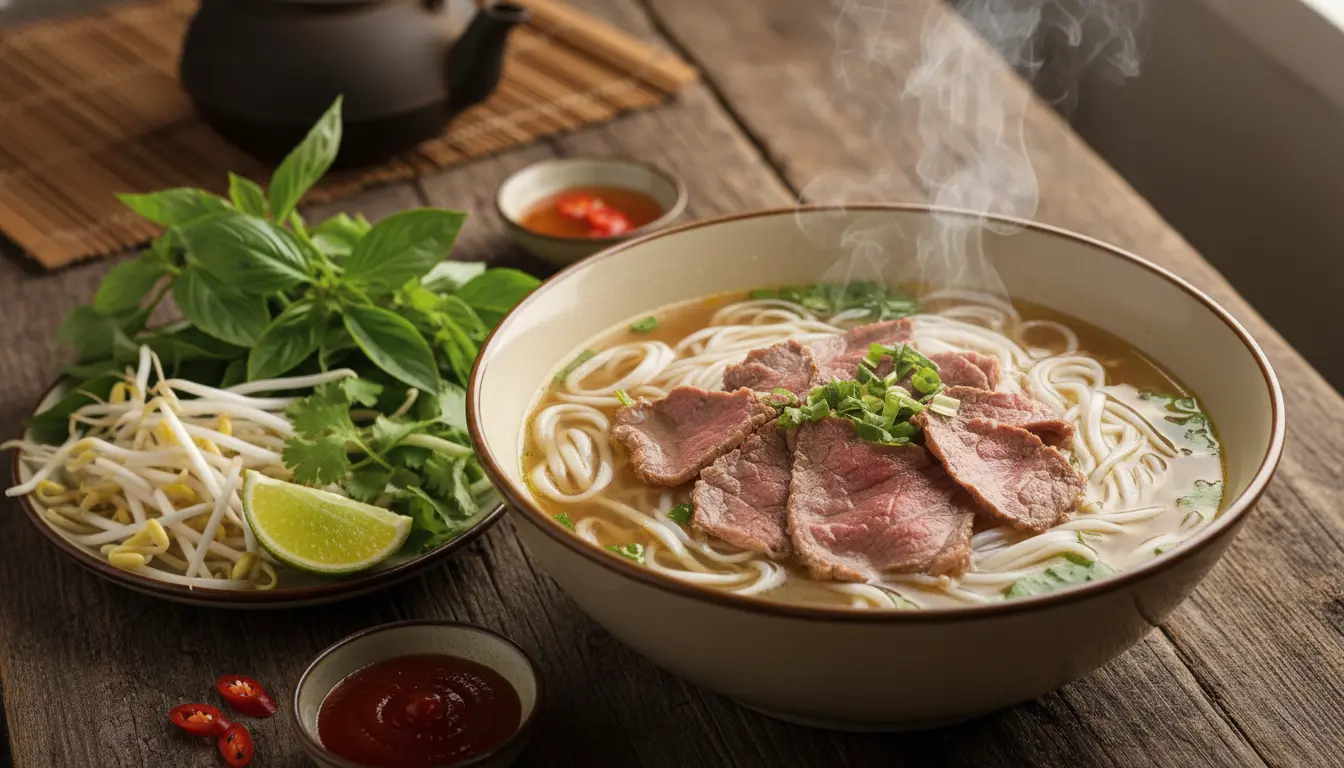
Pho bo — Vietnam’s iconic beef noodle soup — is all about the broth: a clear, deeply aromatic stock built on charred aromatics, toasted spices, and hours of gentle simmering. This is the recipe we cook at home when we want the real thing. It takes time, but almost all of it is hands-off.
Tested in our kitchen over multiple batches to dial in the spice balance and a clear (not cloudy) broth.
Why this recipe works
- Charring the onion and ginger adds the smoky backbone that defines real pho.
- Toasting then bagging the spices (star anise, cinnamon, clove, coriander, fennel) gives aroma without a muddy broth.
- Parboiling the bones for 5 minutes, then rinsing, is the single biggest trick for a clear broth.
Ingredients
- 2 kg beef bones (marrow + knuckle)
- 500 g beef brisket
- 1 large onion, halved
- 1 thumb (60 g) ginger, halved lengthwise
- 4 star anise, 1 cinnamon stick, 4 cloves, 1 tbsp coriander seeds, 1 tsp fennel seeds
- 2 tbsp fish sauce (plus more to taste), 1 tbsp rock sugar, salt
- 400 g fresh or dried banh pho (flat rice noodles)
- 200 g raw eye-of-round, sliced paper-thin
- To serve: bean sprouts, Thai basil, lime, sliced chili, hoisin & sriracha
Step by step
- Parboil the bones: cover bones with cold water, boil hard for 5 minutes, drain and rinse. Scrub the pot.
- Char aromatics: blacken the onion and ginger directly over a flame or under the broiler until fragrant.
- Toast spices: dry-toast the spices for 1–2 minutes until aromatic, then tie in a spice bag or cheesecloth.
- Simmer: return bones to the clean pot with 5 L water, brisket, charred aromatics, and the spice bag. Bring to a bare simmer and cook 3 hours, skimming foam. Remove brisket at 1.5 hours, slice once cool.
- Season: add fish sauce, rock sugar and salt. Taste — the broth should be savory and aromatic, not salty.
- Assemble: soak/cook noodles per package, divide into bowls, top with raw beef slices and brisket, then ladle boiling broth over to cook the raw beef. Serve with herbs and condiments.
Equipment we use
A heavy 8-quart stockpot and a fine-mesh skimmer make this far easier. See our kitchen gear guides for tested recommendations. (This section contains affiliate links — see our disclosure.)
Authentic Pho Bo (Vietnamese Beef Noodle Soup)
Ingredients
Method
- Parboil the bones: cover with cold water, boil hard 5 minutes, drain and rinse. Scrub the pot.
- Char the onion and ginger directly over a flame or under the broiler until fragrant and blackened.
- Dry-toast the spices 1-2 minutes until aromatic, then tie in a spice bag.
- Simmer bones in 5 L water with brisket, charred aromatics and spice bag at a bare simmer for 3 hours, skimming foam. Remove brisket at 1.5 hours and slice once cool.
- Season the broth with fish sauce, rock sugar and salt to taste — savory and aromatic, not salty.
- Cook noodles per package, divide into bowls, top with raw beef slices and brisket, then ladle boiling broth over to cook the raw beef. Serve with herbs and condiments.
Notes
Frequently asked questions
Why is my pho broth cloudy?
Cloudiness comes from boiling too hard and from impurities on the bones. Parboil and rinse the bones first, then keep the broth at a bare simmer — never a rolling boil — and skim regularly.
Can I make pho broth in advance?
Yes. The broth keeps 4 days refrigerated and 3 months frozen. Make a big batch, freeze in portions, and you have restaurant-quality pho on a weeknight.
What cut of beef is best for the raw slices?
Eye of round or sirloin, sliced paper-thin against the grain. Freezing the beef for 30 minutes makes thin slicing much easier.
Editor’s note: add a WP Recipe Maker recipe card here (with ingredients, times, nutrition and ratings) in the block editor to generate Recipe schema for rich results.
Variations & substitutions
While traditional Pho Bo is a masterpiece in itself, there are several authentic and practical variations you can explore to tailor it to your taste or what you have on hand. Remember, the soul of pho lies in its aromatic, clear broth, so keep that as your guiding star.
- Beef Cuts: Beyond the classic rare eye of round (tái) and brisket (nạm), consider adding thinly sliced flank steak (gầu), tripe (sách), or even beef meatballs (bò viên) for a more robust bowl. Each adds a unique texture and flavor dimension. Ensure all cuts are thinly sliced against the grain for tenderness.
- Noodle Types: While bánh phở (flat rice noodles) are standard, the width can vary. Thicker noodles (bánh phở lở) offer more chew, while thinner ones (bánh phở nhỏ) provide a delicate slurp. Ensure you’re using fresh or good quality dried rice noodles, never egg noodles.
- Broth Aromatics: The core spices (star anise, cinnamon, black cardamom, cloves, fennel seeds) are essential, but you can subtly adjust their ratios. Some recipes might include a small piece of dried tangerine peel for a hint of citrus, or a touch more ginger for warmth. Always toast them lightly until fragrant, not burnt.
- Garnishes: While bean sprouts, lime, jalapeño, and fresh herbs are standard, feel free to experiment with different herb combinations. Thai basil, sawtooth herb (ngò gai), and cilantro are crucial. Some regions might add a sprinkle of fried shallots or a few sprigs of Vietnamese mint for extra aroma.
- Spice Level: Adjust the amount of fresh chilies (like bird’s eye chilies) or chili garlic sauce (tương ớt Sriracha) to your preference. A small dollop of chili oil can also add a beautiful hue and heat.
What to serve with it
Authentic Pho Bo is often considered a complete meal in itself, a symphony of flavors and textures in one bowl. However, in Vietnam, it’s common to find a small array of condiments and sometimes light accompaniments that enhance the experience without overshadowing the star of the show. Think of these as supporting acts that let the pho truly shine.
- Hoisin Sauce (Tương Đen) and Sriracha (Tương Ớt): These are the classic dipping sauces. Some prefer to add them directly to their bowl, while others use them for dipping the beef slices as they eat.
- Fresh Lime Wedges: A squeeze of fresh lime brightens the broth and adds a crucial acidic counterpoint to the rich beef.
- Fresh Chilies: Thinly sliced bird’s eye chilies (ớt hiểm) or jalapeños for those who crave extra heat.
- Extra Fresh Herbs: A generous plate of additional herbs like Thai basil, cilantro, sawtooth herb (ngò gai), and mint for customization.
- Bean Sprouts: A handful of fresh, crisp bean sprouts adds a refreshing crunch.
- Dough Fritters (Bánh Quẩy): These savory, fried dough sticks are often served alongside pho in Northern Vietnam, perfect for dipping into the hot broth to soak up its goodness.
- Vietnamese Iced Coffee (Cà Phê Sữa Đá): A popular beverage pairing, offering a sweet and strong contrast to the savory pho.
Make ahead, storage & reheating
Pho is an ideal candidate for making ahead, especially the broth, which often improves with time. Proper storage and reheating are key to preserving its incredible flavor and texture.
- Broth: The broth is the star and can be made entirely in advance. Once cooled, skim off any remaining fat. Store it in airtight containers in the refrigerator for up to 4-5 days. For longer storage, freeze the broth in freezer-safe containers or bags for up to 3 months. Thaw overnight in the refrigerator before gently reheating on the stovetop over medium heat until simmering.
- Cooked Beef (Brisket, Flank, etc.): If you’ve cooked beef cuts like brisket in the broth, slice them once cooled and store them separately from the broth in an airtight container in the refrigerator for up to 3-4 days. To reheat, you can gently warm the slices in a little of the hot broth or microwave briefly.
- Raw Sliced Beef (Eye of Round): This should always be sliced fresh just before serving. Do not prepare ahead and store.
- Noodles: Rice noodles are best cooked fresh just before serving. Pre-cooked noodles tend to clump and become mushy. If absolutely necessary, you can cook them slightly al dente, rinse with cold water, toss with a tiny bit of neutral oil, and store in the fridge for up to 1 day. Reheat by briefly blanching in hot water.
- Garnishes: All fresh herbs, bean sprouts, lime, and chilies should be stored separately in the refrigerator and prepared just before serving to maintain their freshness and crispness.
- Assembly & Reheating a Full Bowl: For the best experience, assemble individual bowls fresh. Bring your broth to a rolling boil. Quickly blanch noodles, arrange beef and garnishes in a bowl, then ladle the piping hot broth over everything. The heat of the broth will cook the thinly sliced raw beef perfectly. Never reheat a fully assembled bowl of pho, as the noodles will overcook and the herbs will wilt.
Common mistakes to avoid
Crafting truly authentic Pho Bo requires patience and attention to detail. Steering clear of these common pitfalls will elevate your homemade pho from good to extraordinary.
- Not Blanching Bones Properly: Skipping the initial blanching of beef bones (boiling for 10-15 minutes, then rinsing thoroughly) is a cardinal sin. This step removes impurities, blood, and scum, which are crucial for achieving that crystal-clear, clean-tasting broth.
- Rushing the Broth Simmer: Pho broth is a labor of love. A minimum of 6-8 hours (and often longer) of gentle simmering is essential to extract maximum flavor from the bones and aromatics. A rapid boil will emulsify fats and make your broth cloudy and greasy. Maintain a very gentle simmer.
- Over-toasting or Burning Spices: While toasting spices (star anise, cinnamon, etc.) is vital for releasing their aromatics, burning them will result in a bitter, acrid broth. Toast gently in a dry pan over medium-low heat until fragrant, typically 1-2 minutes, then remove immediately.
- Adding Fish Sauce Too Early: While fish sauce is a key seasoning, adding it too early in the long simmering process can result in a cooked-out, less vibrant flavor. Add the majority of your fish sauce (and salt, rock sugar) in the last hour or two of simmering, then adjust to taste at the very end.
- Overcooking Noodles: Rice noodles cook very quickly. Overcooking them turns them into a mushy, unappetizing mess. Cook them just until al dente (a slight chew remains), usually 30-60 seconds in boiling water, then drain immediately and rinse briefly to stop the cooking process if not serving instantly.
More questions
Why is blanching the bones so important for a clear broth?
Blanching the bones—boiling them for 10-15 minutes and then thoroughly rinsing them and the pot—is absolutely crucial for achieving the signature clear pho broth. This process removes impurities like blood, bone fragments, and coagulated proteins that would otherwise cloud your broth and give it an undesirable murky appearance and sometimes a slightly off-flavor. It’s the essential first step to a pristine, aromatic foundation.
Can I make Pho Bo vegetarian or vegan?
While “Pho Bo” specifically means “beef pho,” you can certainly adapt the concept to a vegetarian or vegan version, though it won’t be authentic Pho Bo. To do so, you’d create a rich vegetable broth using roasted vegetables (onions, carrots, daikon radish), mushrooms (shiitake, dried porcini for umami), and the traditional pho spices. Replace beef with fried tofu, seitan, or various mushrooms. It’s a delicious dish in its own right, often called “Phở Chay,” but distinct from the beef original.
What’s the best way to get my rare beef slices perfectly tender?
Achieving perfectly tender rare beef (tái) comes down to two key factors: the cut and the slicing technique. Use a very lean, tender cut like eye of round or sirloin tip. The crucial technique is to slice the beef paper-thin (about 1/16 to 1/8 inch thick) and against the grain. Partially freezing the beef for 30-45 minutes before slicing makes it much easier to achieve these thin, uniform slices. When served, the piping hot broth will gently cook the beef to a perfect medium-rare, ensuring it remains incredibly tender.
