
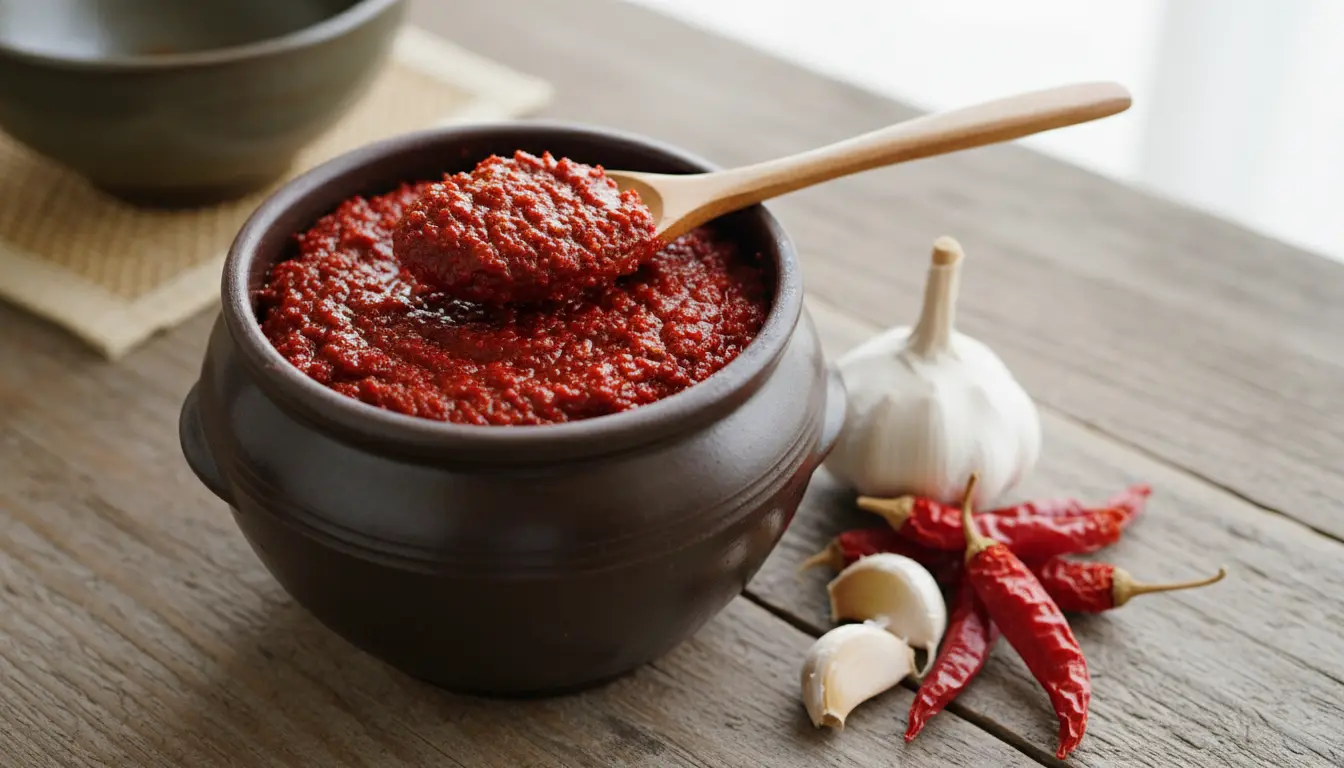
Gochujang (고추장), the vibrant crimson star of Korean cuisine, is more than just a chili paste—it’s a fermented powerhouse of flavor. This thick, glossy condiment delivers a complex symphony of spicy, sweet, and savory notes, underpinned by a deep umami that’s utterly unique. Made primarily from gochugaru (Korean chili powder), glutinous rice, meju (fermented soybean powder), yeotgireum (barley malt powder), and salt, gochujang undergoes a traditional fermentation process, often in large earthenware pots called jangdok. This fermentation is what transforms simple ingredients into a paste with unparalleled depth, making it an indispensable ingredient in countless Korean dishes and a rising star in global kitchens.
The main types
While the core essence of gochujang remains consistent, you’ll encounter a few variations:
- Standard/Commercial Gochujang: This is the most common type, widely available in tubs at Asian grocery stores and many mainstream supermarkets. Brands like Sempio, CJ CheilJedang (Bibigo), and Daesang (Chungjungone) dominate the market. These typically come in various spice levels (mild, medium, hot, very hot), clearly marked on the packaging.
- Artisanal/Traditional Gochujang: Often made by smaller producers using time-honored methods, sometimes with longer fermentation periods. These can offer a more nuanced, complex flavor profile and often use higher-quality, locally sourced ingredients. They might be harder to find and more expensive.
- Mat-Gochujang (Seasoned Gochujang): Literally “flavor gochujang,” this type is pre-mixed with additional ingredients like garlic, onion, sesame oil, soy sauce, and sometimes vinegar. It’s designed for convenience, often used directly as a dipping sauce or for quick bibimbap. While tasty, it lacks the versatility of pure gochujang for general cooking.
- Spice Levels: Always check the label for the spice level, often indicated by Korean characters: 순한맛 (soon-han-mat, mild), 보통맛 (bo-tong-mat, medium), 매운맛 (mae-un-mat, hot), 아주 매운맛 (a-ju mae-un-mat, very hot).
How to choose a good one
Selecting the right gochujang can elevate your cooking. Here’s what to look for:
- Ingredients List: Opt for gochujang with a short, natural ingredient list. Key components should be gochugaru, glutinous rice, meju (fermented soybean powder), salt, and barley malt powder. While some traditional gochujang uses rice syrup, be wary of excessive additives or a long list of unfamiliar ingredients.
- Color: A good gochujang should have a deep, rich reddish-brown hue. Avoid pastes that are unnaturally bright red (which could indicate artificial coloring) or overly dark brown (which might suggest poor quality or excessive age).
- Texture: It should be a thick, glossy, and relatively smooth paste. It shouldn’t be watery or overly grainy.
- Fermentation Period: Premium or artisanal brands might highlight a longer fermentation period (e.g., 6 months, 1 year). Longer fermentation generally leads to deeper, more complex flavors.
- Brand Reputation: Stick with well-known Korean brands like Sempio, CJ CheilJedang (Bibigo), or Daesang (Chungjungone) for reliable quality and consistency, especially when starting out.
- Spice Level: Choose based on your personal preference. If you’re new to gochujang, start with a “mild” or “medium” variety and work your way up.
How to store it
Proper storage is key to maintaining gochujang’s flavor and preventing spoilage:
- Refrigerate Immediately: Once opened, gochujang MUST be refrigerated.
- Airtight Container: If the original tub isn’t perfectly airtight, transfer the gochujang to a clean, airtight container to prevent drying out and absorption of fridge odors.
- Surface Protection: For extended storage, press a piece of plastic wrap directly onto the surface of the gochujang before sealing the container. This creates an extra barrier against air, which helps prevent oxidation and mold formation.
- Longevity: Properly stored in the refrigerator, opened gochujang can last 6-12 months. Its flavor may deepen slightly over time, but it should remain safe to consume.
- Mold: If you ever see mold on the surface of your gochujang, discard the entire batch. Do not attempt to scrape off the mold, as its roots can penetrate deeper into the paste.
How to use it in cooking
Gochujang’s unique flavor profile—spicy, sweet, savory, and packed with umami—makes it incredibly versatile. Here are specific techniques and applications:
- Bibimbap Sauce: Combine 2 tbsp gochujang, 1 tbsp sesame oil, 1 tbsp sugar or honey, 1 tbsp rice vinegar, 1 tsp minced garlic, and 1 tbsp water or dashi. Mix well and drizzle over rice and vegetables.
- Tteokbokki Sauce: For a classic street food, simmer 3-4 tbsp gochujang with 1 tbsp gochugaru, 2 tbsp soy sauce, 2 tbsp sugar, 2 cloves minced garlic, and 3-4 cups anchovy-kelp dashi (or water). Add rice cakes and fish cakes and cook until thickened.
- Meat Marinades (Pork Belly, Chicken, Tofu): Whisk together 3 tbsp gochujang, 2 tbsp soy sauce, 1 tbsp sesame oil, 1 tbsp minced garlic, 1 tsp minced ginger, 1 tbsp sugar or honey, and 1 tbsp mirin or rice wine for every 1 lb of protein. Marinate for at least 30 minutes, or ideally overnight, before grilling, stir-frying, or roasting.
- Gochujang Jjigae (Korean Chili Paste Stew): Incorporate 2-3 tablespoons of gochujang per 4 servings into your broth base (e.g., dashi or vegetable broth) early in the cooking process. This allows the flavor to meld with other ingredients like pork, tofu, and vegetables.
- Kimchi Jjigae: A spoonful (1-2 tbsp) can be added to your kimchi stew for an extra layer of richness and heat.
- Simple Dipping Sauce: Combine 2 tbsp gochujang, 1 tbsp rice vinegar, 1 tsp sugar, 1 tsp sesame oil, and a sprinkle of toasted sesame seeds. Great for fried foods, raw vegetables, or grilled meats.
- Technique: Dissolve 1-2 tablespoons of gochujang into a small amount of liquid (water, broth, soy sauce) before adding it to your stir-fry sauce. Add the sauce towards the end of cooking to prevent the gochujang from burning, which can lead to a bitter taste.
- Gochujang Mayo: Whisk 1 tablespoon of gochujang into ½ cup of mayonnaise for a spicy, creamy spread perfect for sandwiches, fries, or burgers.
- Gochujang Butter: Mix softened butter with a teaspoon or two of gochujang for a flavorful compound butter to melt over corn on the cob, grilled steak, or toast.
- Glazes: Thin gochujang with a little honey or maple syrup and brush over roasted vegetables (like Brussels sprouts or carrots) or chicken wings during the last 10-15 minutes of cooking.
- Start Small: Gochujang is potent. Begin with 1-2 teaspoons for a dish serving 2-4 people and adjust to your spice preference.
- Bloom It: For deeper flavor, briefly sauté gochujang with aromatics like minced garlic and onion in a little oil for 1-2 minutes before adding other liquids or ingredients. This “blooming” process helps release its full flavor potential.
- Balance Flavors: Always balance gochujang’s heat and sweetness with other elements: acidity (vinegar, citrus), salt (soy sauce), and additional umami (dashi, mushrooms, miso).
Substitutes
Gochujang’s unique fermented, sweet, and savory heat is difficult to replicate perfectly. However, if you’re in a pinch, you can create approximations that offer a similar profile:
- Sriracha + White Miso Paste + Sugar: This is arguably the closest approximation. Sriracha provides the chili heat and some sweetness, white miso contributes fermented savory depth, and additional sugar balances the flavors.
- Ratio: Start with 2 parts Sriracha, 1 part white miso paste, and 0.5-1 part sugar (adjust to taste). Mix thoroughly until smooth.
- Chili Garlic Sauce + White Miso Paste + Sugar: Similar to the Sriracha blend, but chili garlic sauce offers a coarser texture and more pronounced fresh garlic notes. Use the same ratio as above.
- Tomato Paste + Gochugaru + Sugar + Soy Sauce: Tomato paste provides body and a touch of acidity, gochugaru delivers the authentic Korean chili flavor, sugar adds sweetness, and soy sauce contributes saltiness and umami.
- Ratio: Mix 1 part tomato paste, 1 part gochugaru, 0.5-1 part sugar, and 0.5 part soy sauce. Add a tiny bit of water if needed to achieve a paste-like consistency.
- Any red chili paste like sambal oelek or harissa can provide heat, but you’ll miss the sweetness, fermented notes, and unique umami of gochujang. These are best used when the recipe primarily calls for gochujang for its spice, and other ingredients can compensate for the missing flavor dimensions.
Important Note: These are approximations. None will fully capture the nuanced, fermented complexity of authentic gochujang. For the best results, investing in a tub of gochujang is highly recommended!
Frequently asked questions
Is gochujang gluten-free?
Traditionally, gochujang is not gluten-free. It contains glutinous rice and barley malt powder, both of which contain gluten. However, due to increasing demand, several brands now offer gluten-free versions. These typically substitute barley malt with rice syrup or other gluten-free thickeners. If you require a gluten-free product, always check the ingredient label carefully and look for a “gluten-free” certification on the packaging.
Is gochujang vegan?
Yes, traditional gochujang is typically vegan. Its core ingredients—gochugaru, glutinous rice, fermented soybean powder (meju), barley malt, and salt—are all plant-based. Animal products are not part of the standard recipe. However, as with any processed food, it’s always a good practice to quickly scan the ingredient list if you have strict dietary requirements, though it’s rare to find non-vegan ingredients in standard gochujang.
How spicy is gochujang?
The spice level of gochujang varies significantly by brand and specific product. Most commercial gochujang ranges from a medium to hot heat. However, it’s a “round” heat—often balanced by its inherent sweetness and savory umami—rather than a sharp, purely capsaicin burn. Many brands label their gochujang with spice levels: 순한맛 (soon-han-mat, mild), 보통맛 (bo-tong-mat, medium), 매운맛 (mae-un-mat, hot), and 아주 매운맛 (a-ju mae-un-mat, very hot). If you’re sensitive to spice, start with a mild version and adjust to your preference.
Can I eat gochujang raw?
Absolutely! Gochujang is frequently used raw, particularly as a dipping sauce or mixed directly into dishes like bibimbap. When eaten raw, its complex fermented flavors are very pronounced. While cooking gochujang (especially by briefly sautéing it with aromatics) can deepen certain notes, it is perfectly safe and delicious to consume straight from the tub (often mixed with other ingredients to create a balanced sauce).
